How to Eat Dhindo: A Taste of Traditional Nepali Food and Culture
"During our journeys across Nepal, we sometimes see international visitors being introduced to Dhindo for the first time. Some try to eat it with a spoon, others cut it into pieces, and a few look at it wondering what to do next! There is no need to feel embarrassed. Eating Dhindo is easy once somebody shows you the traditional way!"
A Little Guide to Enjoying One of Nepal's Traditional Foods:
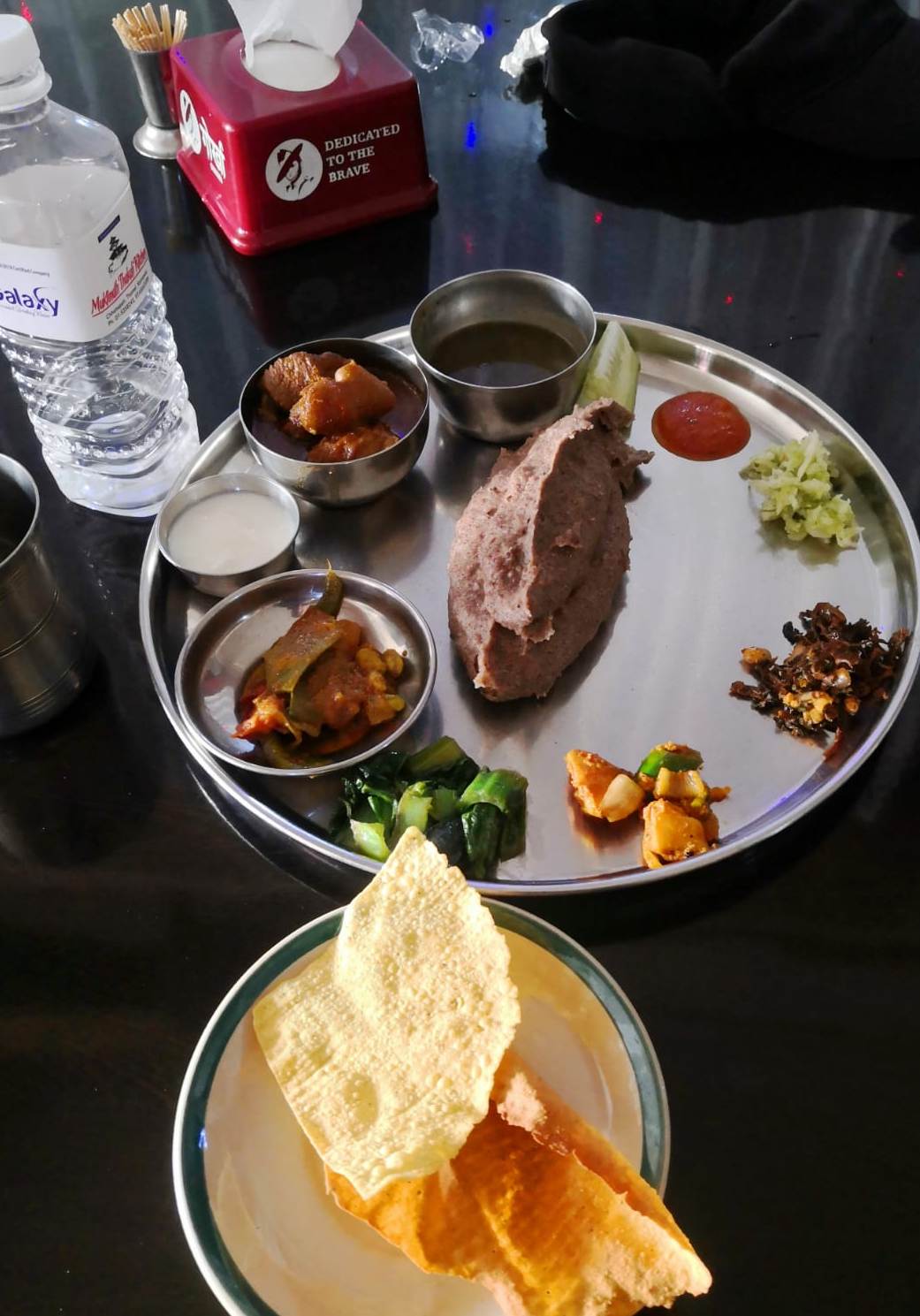 Have you ever been served a plate of Dhindo and wondered how on earth you are supposed to eat it?
You are not alone!
During our journeys and dining experiences in Nepal, we sometimes see international visitors trying Dhindo for the first time. Some look at it curiously,
some reach for a spoon, and others try to cut it into pieces as they might do with a potato dish. It is perfectly understandable. If you have never eaten Dhindo before, nobody expects you to know the traditional way.
But don't worry. Eating Dhindo is much easier than it might look, and once you get the idea, you may find yourself enjoying it quite a lot
First, what exactly is Dhindo?
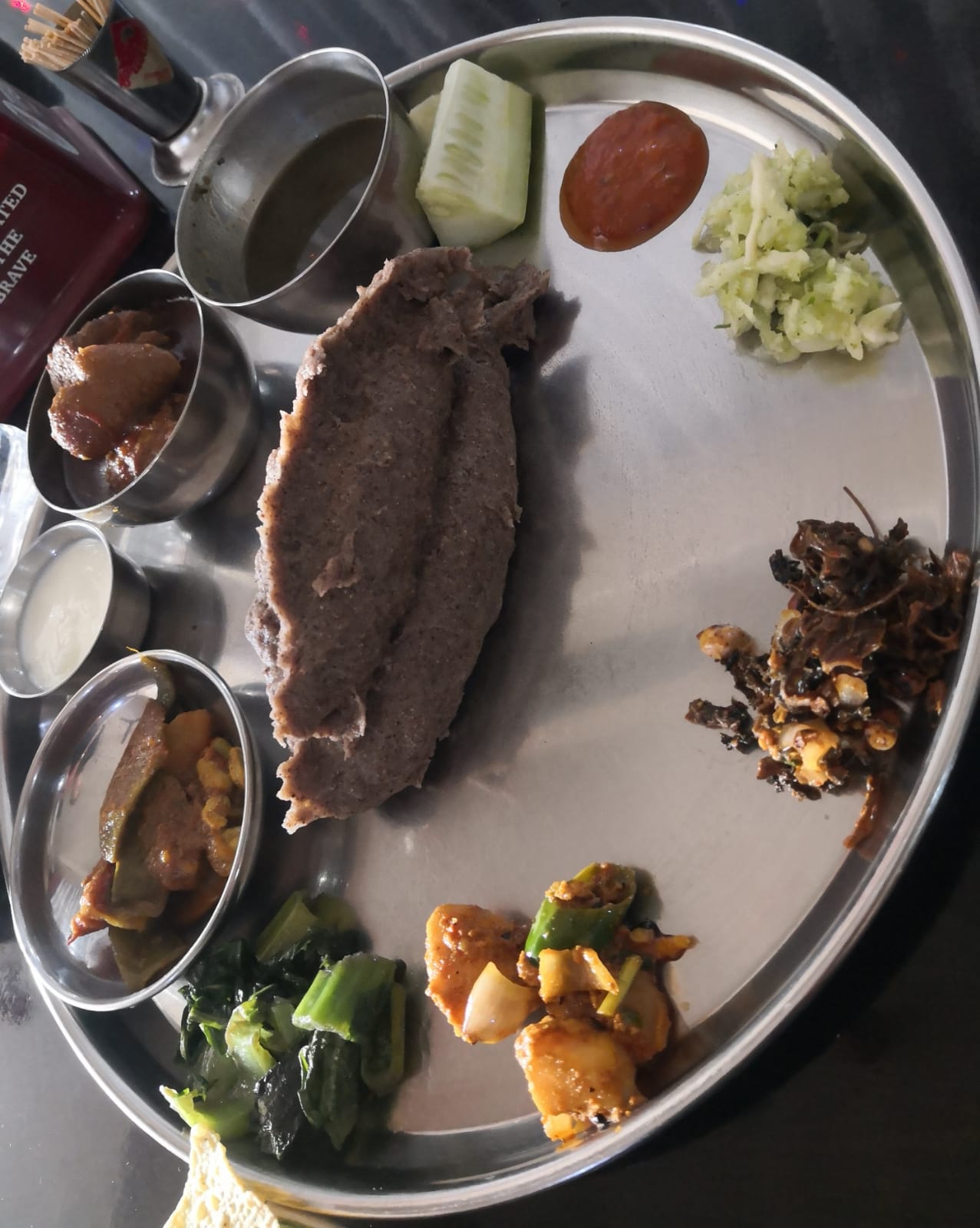
Dhindo is a traditional Nepali food prepared by gradually adding flour to boiling water and stirring continuously until it becomes a thick, firm and smooth mass. Depending on the region and household, it can be made from millet, buckwheat or maize flour.
It has a distinctive texture and a mild, earthy taste. Unlike rice or bread, Dhindo is generally not eaten on its own. It is served with a variety of accompaniments, which make the meal particularly enjoyable.
So, how do you eat Dhindo?
Here is the simple traditional approach:
1. Take a small portion
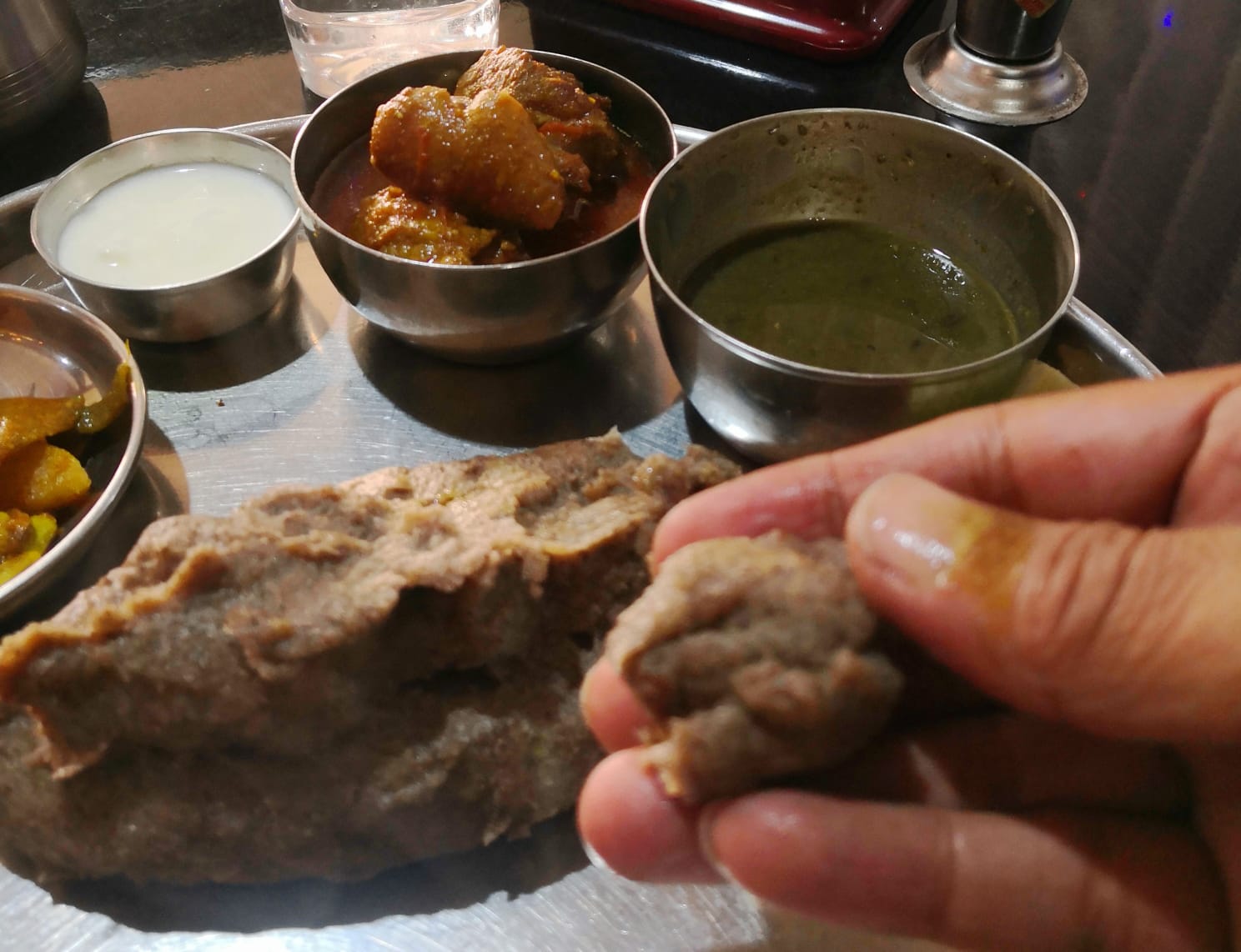
Traditionally, Dhindo is eaten with the right hand. Using your fingertips, pinch off a small portion from the main serving. There is no need to take a large lump.
2. Shape it into a small bite
Gently press the portion between your fingertips and thumb to make a manageable little bite. You do not need to make a perfect ball or knead it like dough.
3. Dip it into the accompanying dish
This is where the enjoyment begins! Dip your small piece of Dhindo into the curry, soup, lentils or other accompanying dish. You can also press a little depression into the piece to hold some gravy.
4. Enjoy it together
Eat the Dhindo with the curry or soup, allowing the different flavors to complement one another. Take your time, try different combinations and discover which ones you like best.
What goes well with Dhindo?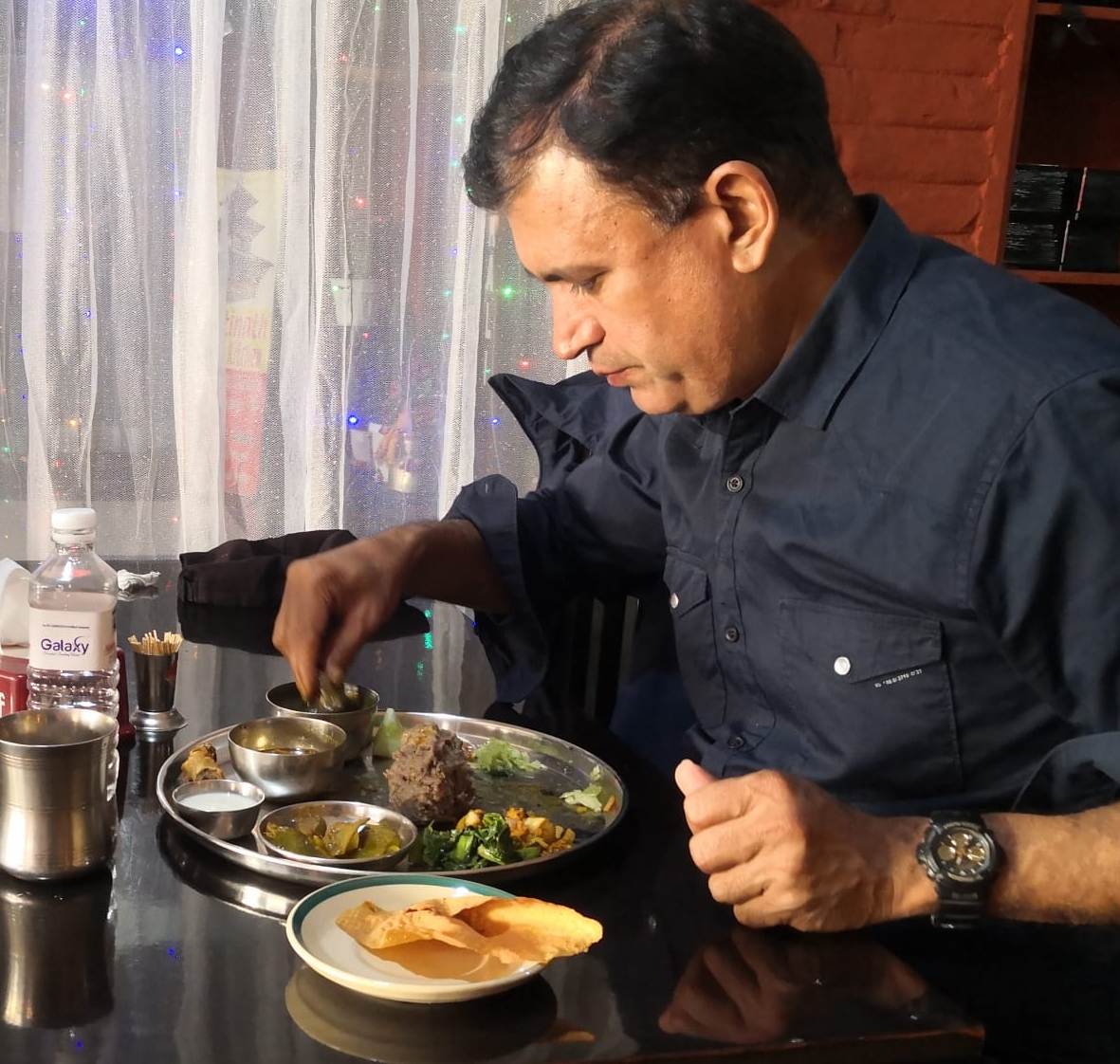
A traditional Dhindo meal can come with several delicious side dishes, depending on the region and the season. Common accompaniments include:
- Gundruk soup, prepared from fermented leafy greens.
- Vegetable curry and seasonal green vegetables.
- Lentil soup (dal).
- Meat curry, often prepared with chicken, buffalo or other locally available meat.
- Pickles (achar), adding a tangy and sometimes spicy flavor.
- Buttermilk or curd, which can provide a refreshing contrast.
There is no single fixed combination. Every household and restaurant may have its own way of serving Dhindo.
A few friendly tips for first-time eaters
- Don't try to eat Dhindo like rice. The technique is different.
- Start with small portions until you become comfortable with its texture.
- Don't eat a large lump at once.
- Try it with different curries and soups rather than eating it plain.
- It is traditionally enjoyed with the fingers, but you can ask for a spoon if you prefer.
And one final suggestion: don't be shy about asking a Nepali friend, guide or restaurant server to demonstrate. Most people will be happy to show you!
More than just a meal
Dhindo is more than an alternative to rice or bread. It is part of Nepal's traditional food culture, particularly in rural and mountain communities where locally grown grains have long been important staples.
If you are travelling in Nepal, especially exploring its villages, mountains and traditional settlements, give Dhindo a try. It offers a little insight into the country's everyday food culture, and perhaps a new favorite meal.
Our advice? Take a small bite, dip it into your favorite curry and enjoy. Namaste and happy eating!
|
|