
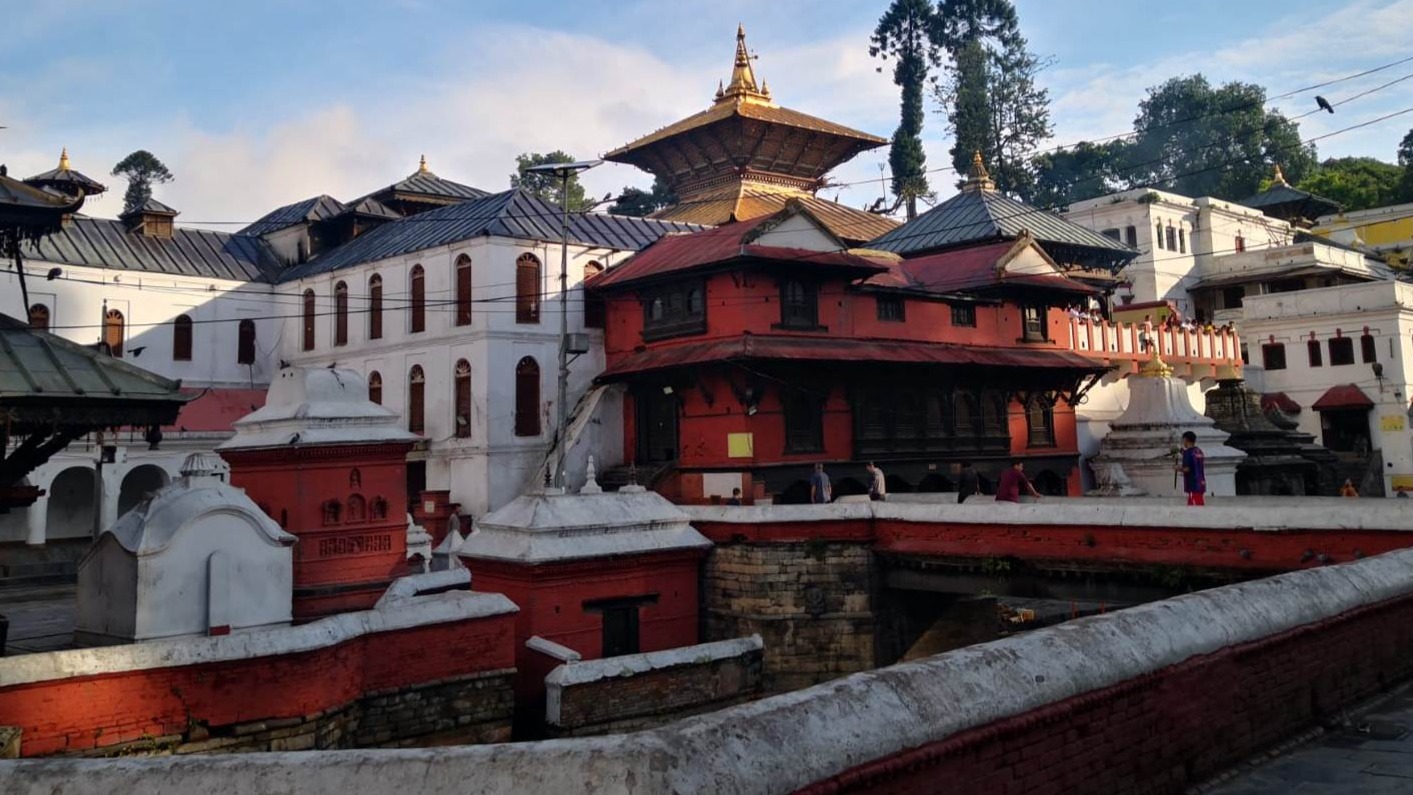
A Spiritual Monday Morning at Pashupatinath Temple During the Holy Month of Shravan
This morning, on the third Monday (Sombar) of the sacred month of Shravan, I had the privilege of visiting the revered Pashupatinath Temple in Kathmandu. Shravan (July–August) is considered the holiest month for devotees of Lord Shiva and every Monday during this month holds special religious significance. Thousands of pilgrims from every corner of Nepal, as well as many from neighboring India, gather at Pashupatinath to offer prayers and seek the blessings of Lord Shiva.
It was a gentle rainy morning, adding a peaceful charm to the sacred surroundings. Despite the drizzle, the atmosphere was filled with devotion and excitement. Long queues of pilgrims patiently waited for their turn to enter the main temple. Fortunately, all four entrance doors of the temple were open, allowing the steady flow of visitors. Even with the large crowd, it took only about 25 to 30 minutes to receive darshan—the sacred glimpse of Lord Pashupatinath. 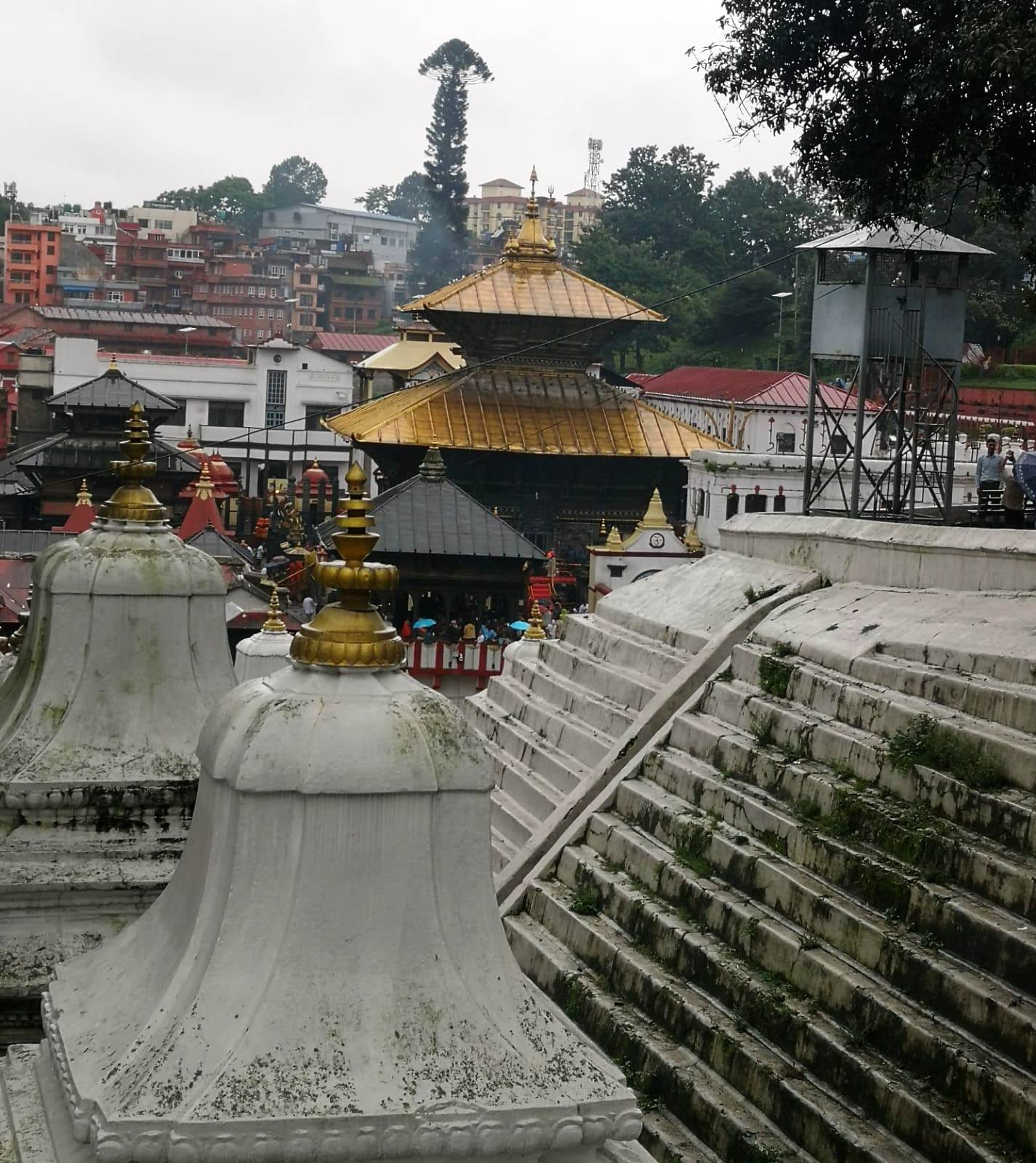
Pashupatinath Temple is Nepal's most sacred Hindu shrine and one of the most important Shiva temples in the world. Believed to date back over a thousand years, the temple is a UNESCO World Heritage Site situated on the banks of the holy Bagmati River. According to Hindu belief, Lord Pashupatinath is the protector of all living beings, and receiving his blessings brings peace, prosperity, and spiritual fulfillment. For many Hindus, visiting this temple at least once in a lifetime is a cherished aspiration.
The Bagmati River was flowing higher than usual due to the recent monsoon rains, creating a beautiful backdrop to the temple complex. The rain had also made the ancient stone-paved paths and steps slippery, particularly for devotees continuing their pilgrimage to the nearby Guhyeshwari Temple, another highly revered Hindu shrine dedicated to Goddess Parvati.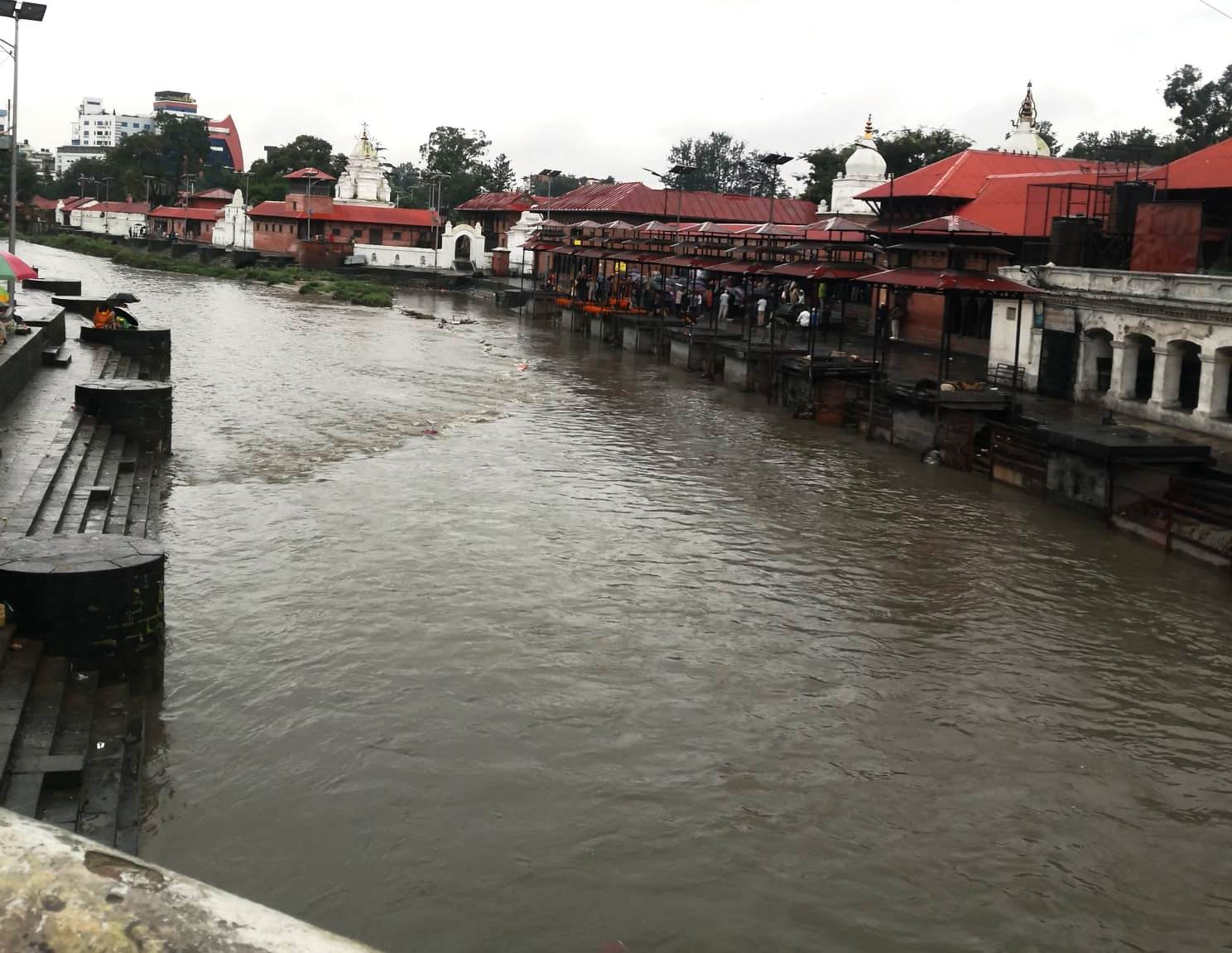
One of the most fascinating aspects of the morning was observing the incredible diversity of the pilgrims. People of all ages arrived wearing colorful traditional clothing, carrying offerings for Lord Shiva. Many held bel leaves (Bel Patra), sacred flowers, incense, milk, and Datura flowers and fruits, all of which are traditionally offered to Lord Shiva during worship. The vibrant attire, devotional chants, temple bells, and fragrant incense combined to create an unforgettable spiritual experience.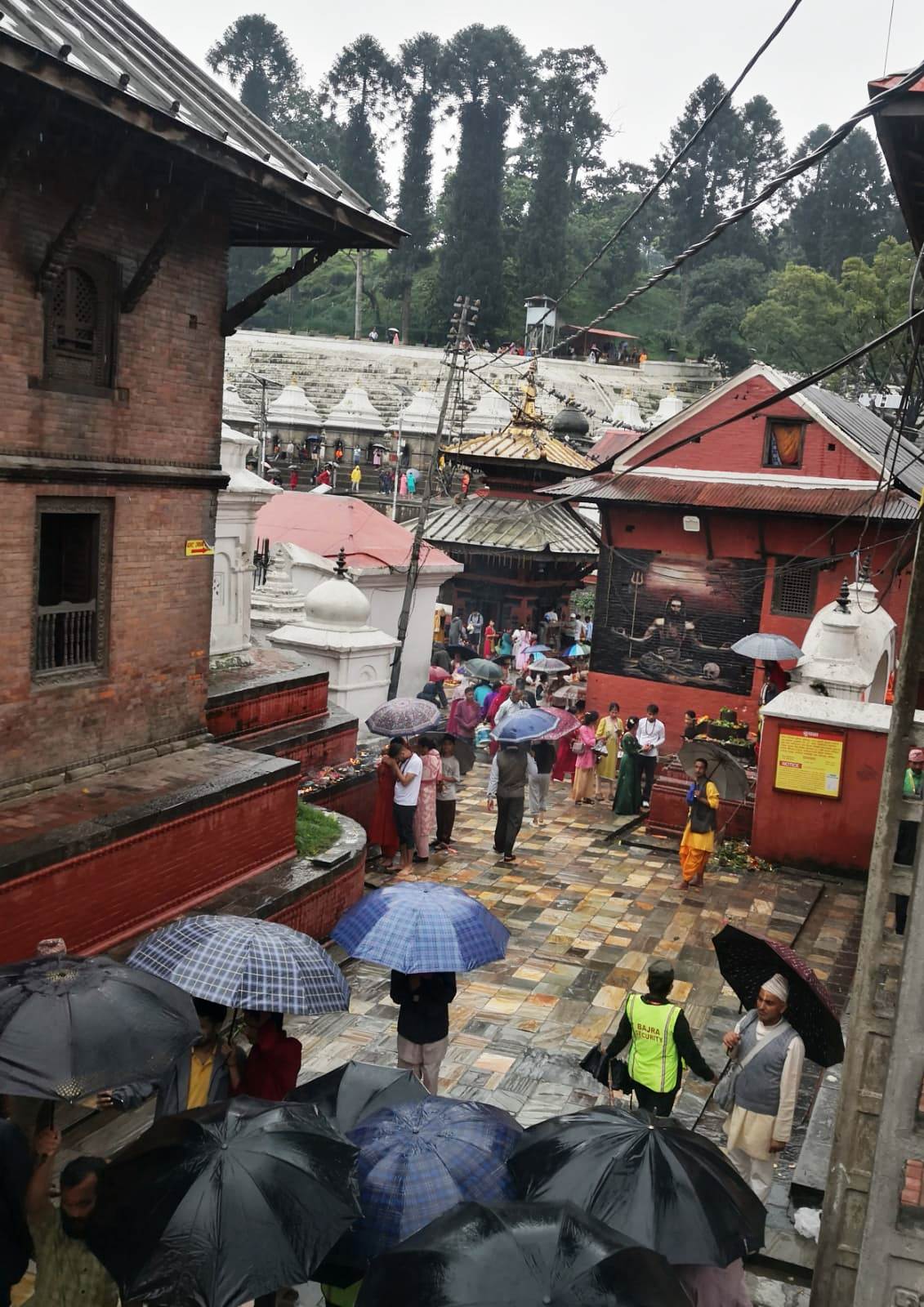
For travelers visiting Kathmandu, spending a morning at Pashupatinath offers much more than sightseeing. It provides a rare opportunity to witness Nepal's living spiritual traditions firsthand. If your itinerary allows, consider visiting on a Monday or Saturday, when the temple complex becomes especially vibrant with pilgrims, rituals, traditional music, and religious ceremonies. It is a wonderful chance to observe authentic Hindu culture while respectfully experiencing one of the world's most important pilgrimage sites.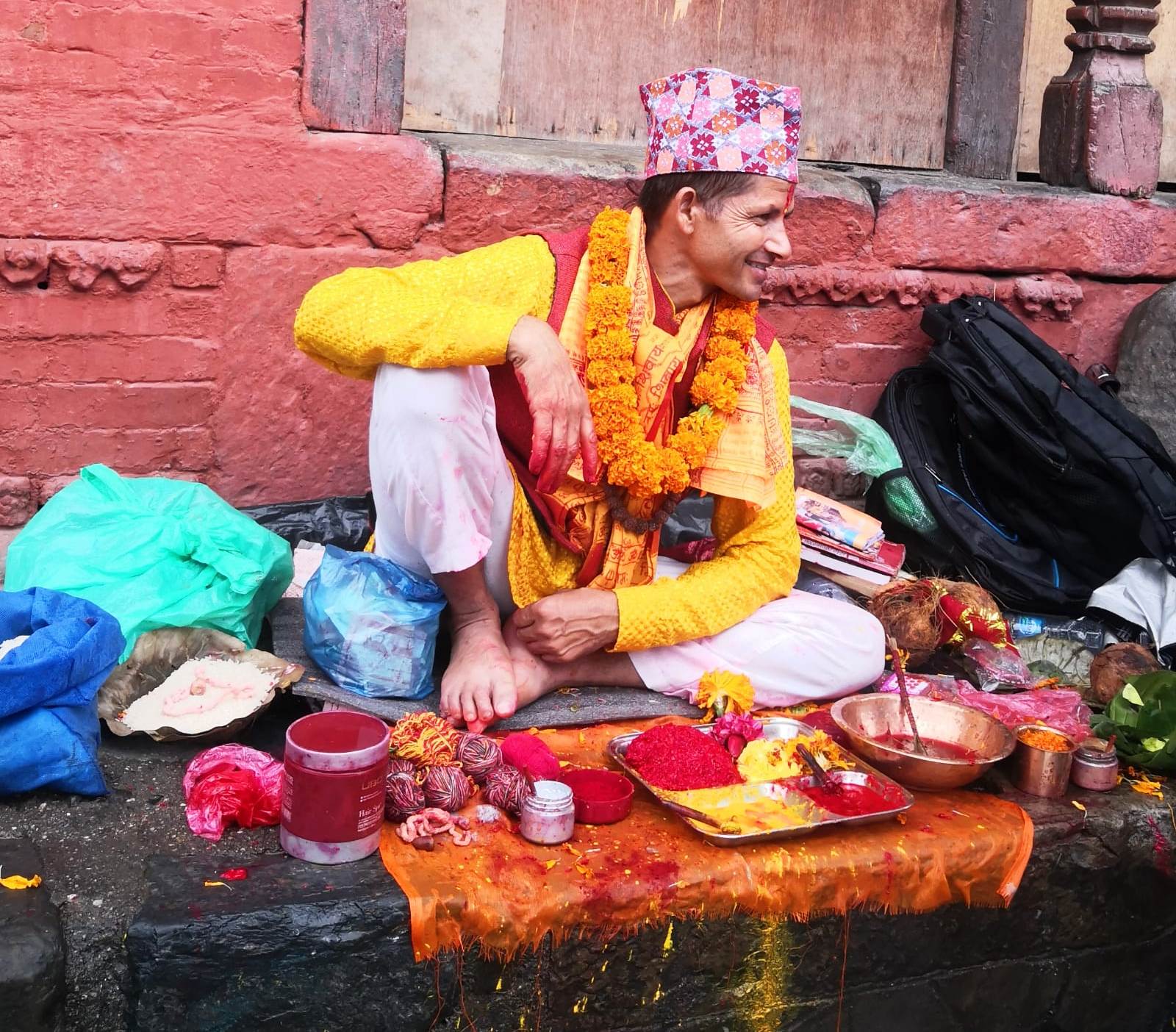
Whether you come seeking spiritual insight, cultural understanding, or simply memorable photography, Pashupatinath never fails to leave a lasting impression. The sacred energy, timeless traditions, and unwavering faith of the devotees make every visit unique, especially during the holy month of Shravan.