Haritalika Teej in Nepal: Women, Culture, Rituals & Celebration
Haritalika Teej is one of Nepal’s most revered festivals for women, celebrated with devotion, fasting, traditional dress, music, dance and family gatherings. Women worship God Shiva and Goddess Parvati, often wearing beautiful red saris, green bangles and traditional jewelry. The festival is especially vibrant around Kathmandu’s temples, including Pashupatinath.
 Among Nepal’s many colorful festivals, Haritalika Teej holds a particularly special place. It is widely regarded as one of Nepal’s most important festivals for women, bringing together religious devotion, family relationships, friendship, music, dance and the vibrant traditions of Nepali society.
For visitors, Teej offers a fascinating opportunity to experience Nepal beyond its mountains and temples. On this occasion, women across the country dress in beautiful traditional clothing, gather in temples and courtyards, sing Teej songs, dance together, pray to Lord Shiva and Goddess Parvati and observe a demanding fast.
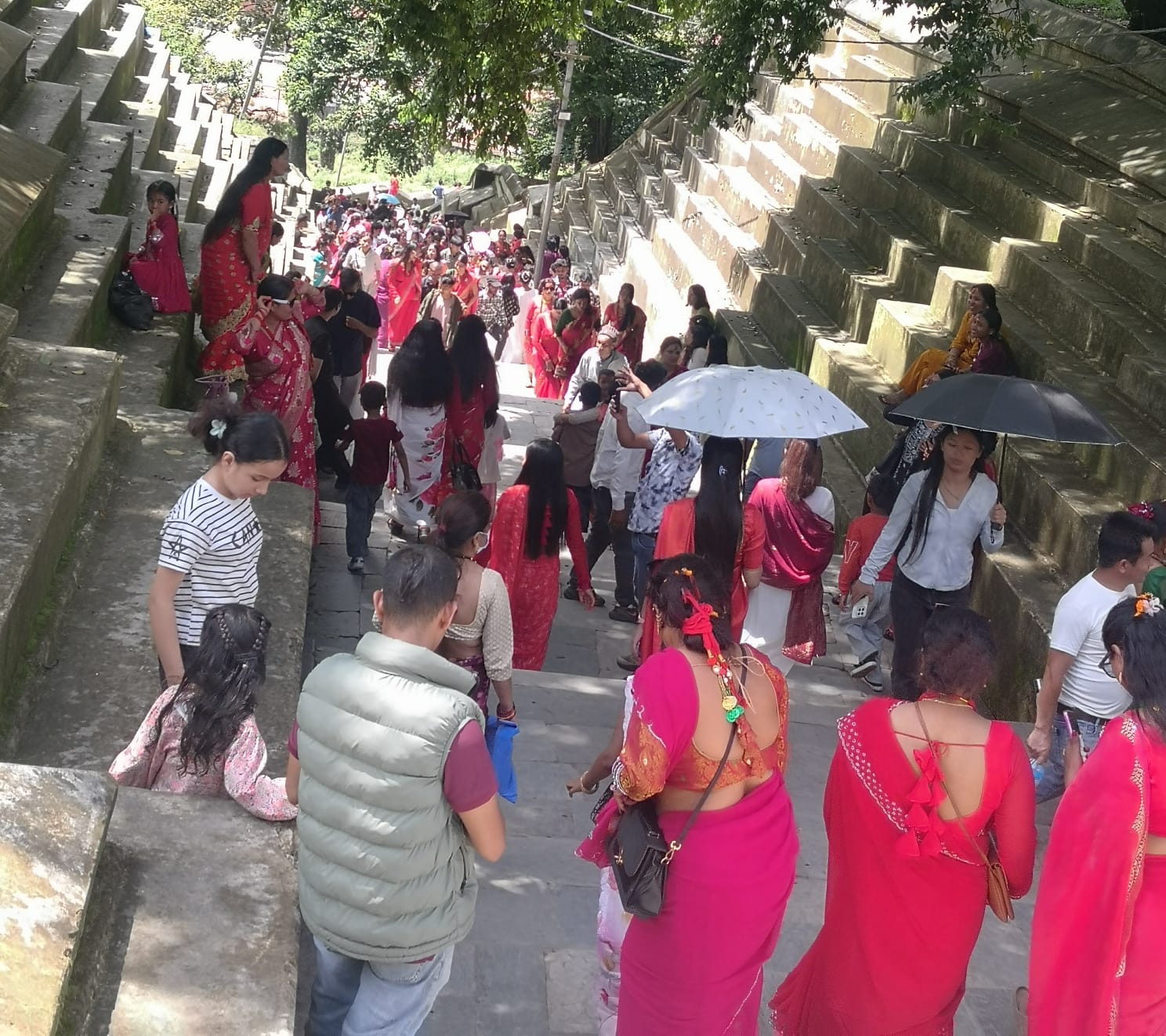
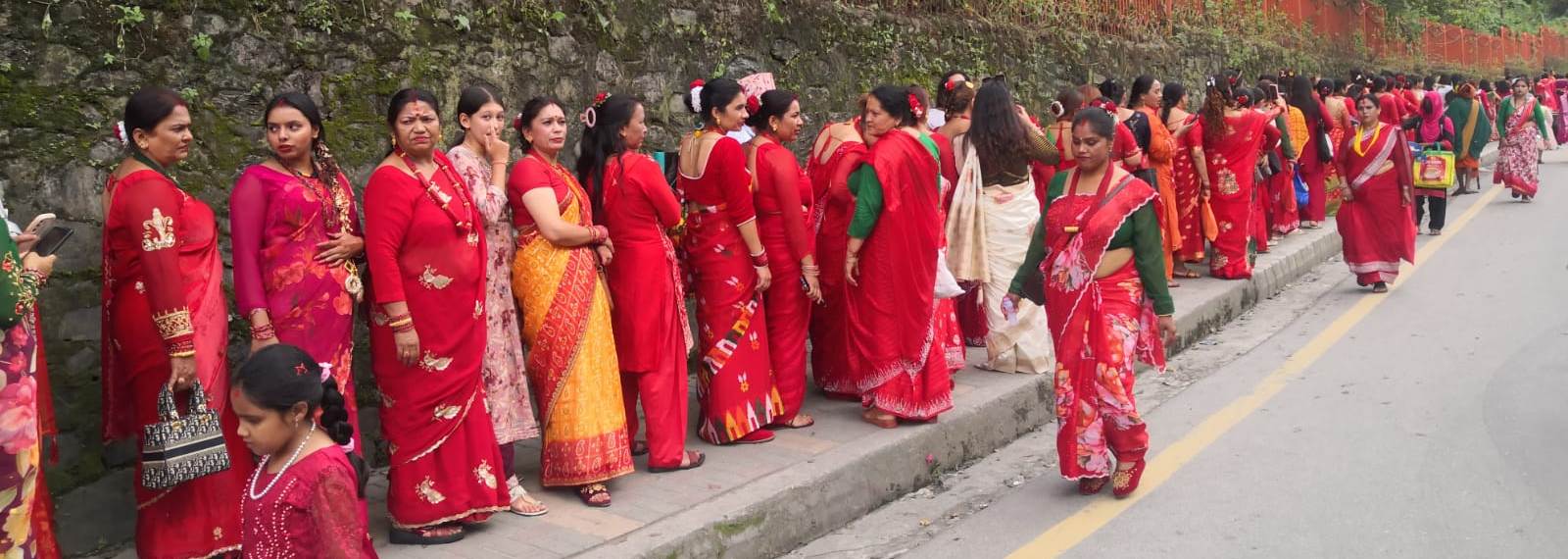
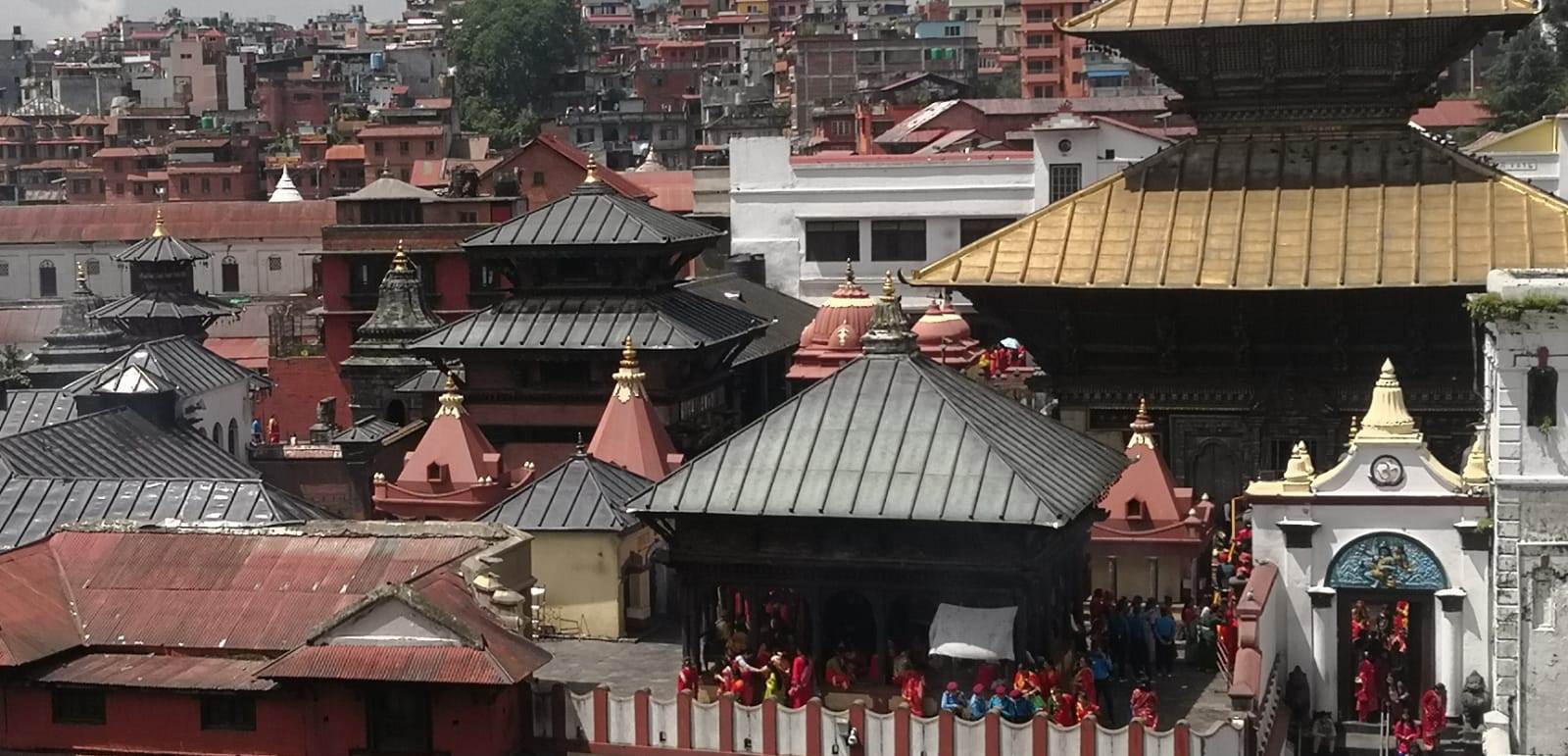
The sight of thousands of women dressed predominantly in red, particularly around Kathmandu's important Hindu temples, is one of the most distinctive cultural scenes of Nepal.
Who Celebrates Haritalika Teej?
Haritalika Teej is primarily a festival observed by Hindu women in Nepal, although its cultural influence extends much further than the strictly religious ritual.
Married women traditionally observe the festival with prayers for the long life, good health and prosperity of their husbands and the well-being of their families. Unmarried women may also observe the fast and pray for a suitable life partner and a happy married life.
But Teej is not only about marriage.
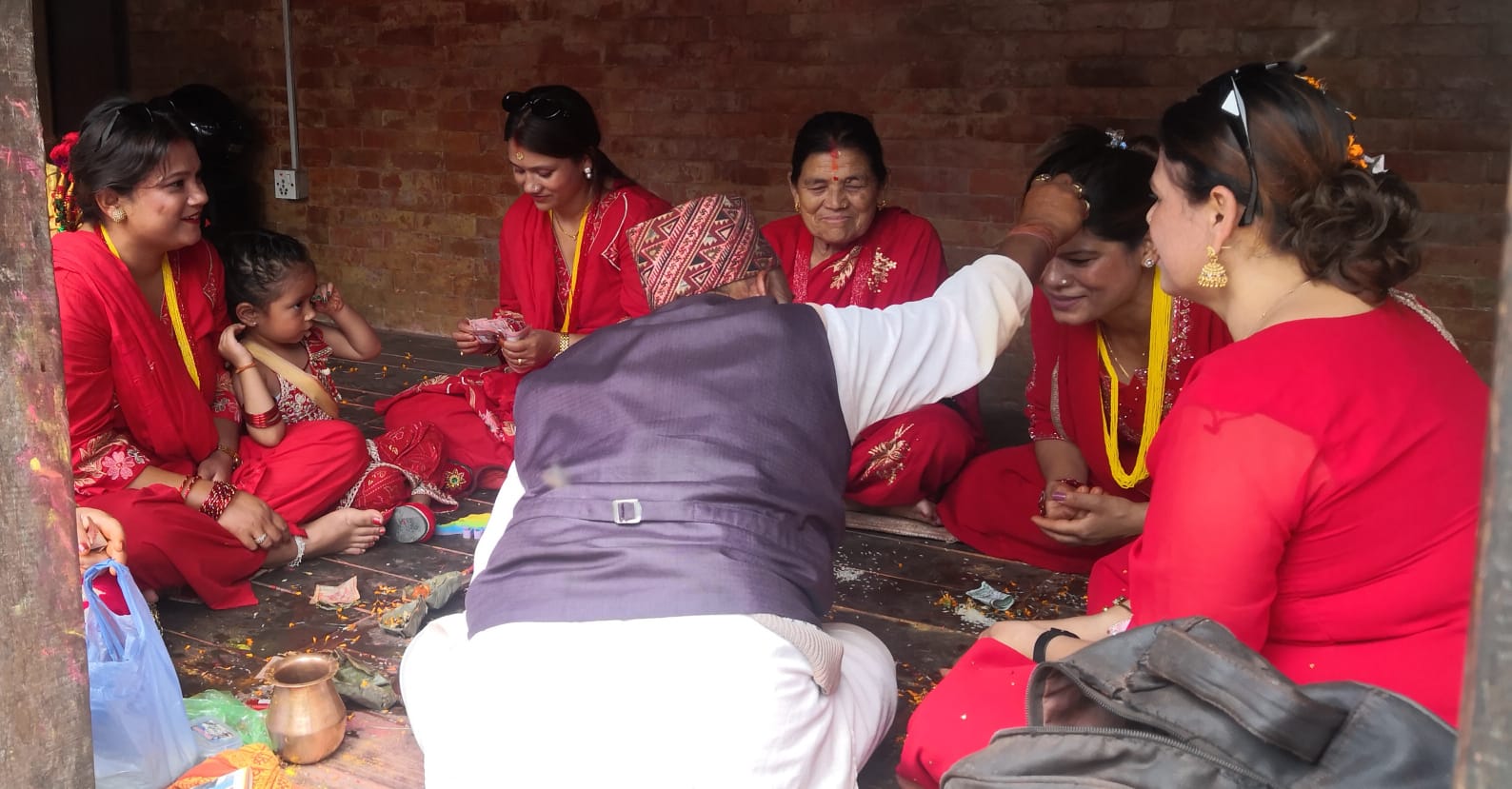
For generations, it has also provided women with an important occasion to return to their maternal homes, meet sisters and childhood friends, share food and emotions, sing together and participate in communal celebrations. In this sense, Teej is also a celebration of womanhood, friendship, sisterhood and family bonds.
Women from different communities, age groups and social backgrounds participate. Elderly women, young married women, newly married women and unmarried girls can all be seen joining the festivities.
Where Is Teej Celebrated?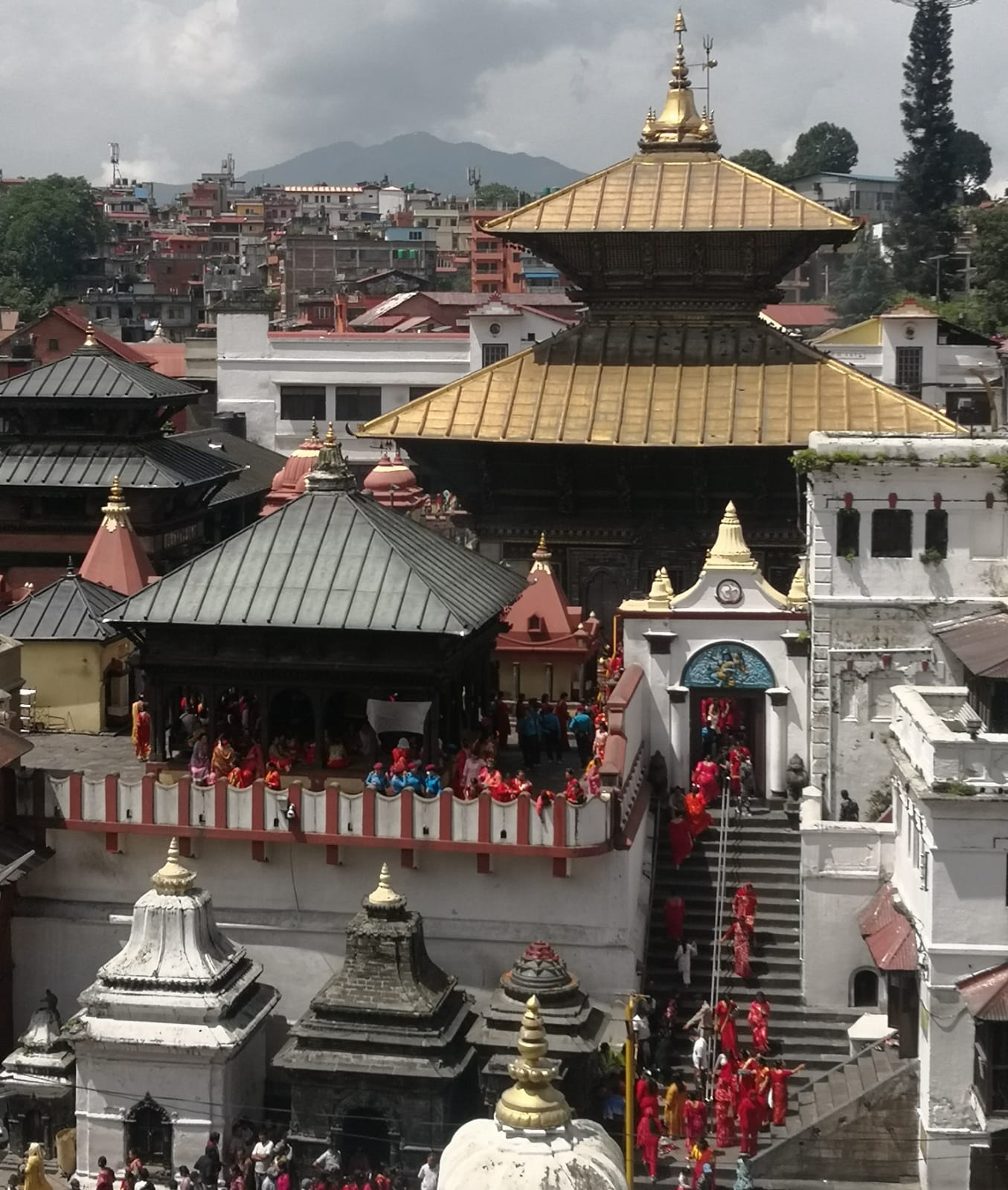
Haritalika Teej is celebrated throughout Nepal, from villages in the hills and mountains to the cities of the Kathmandu Valley and the plains of the Terai.
However, Kathmandu Valley provides some of the most impressive opportunities for visitors to experience the festival.
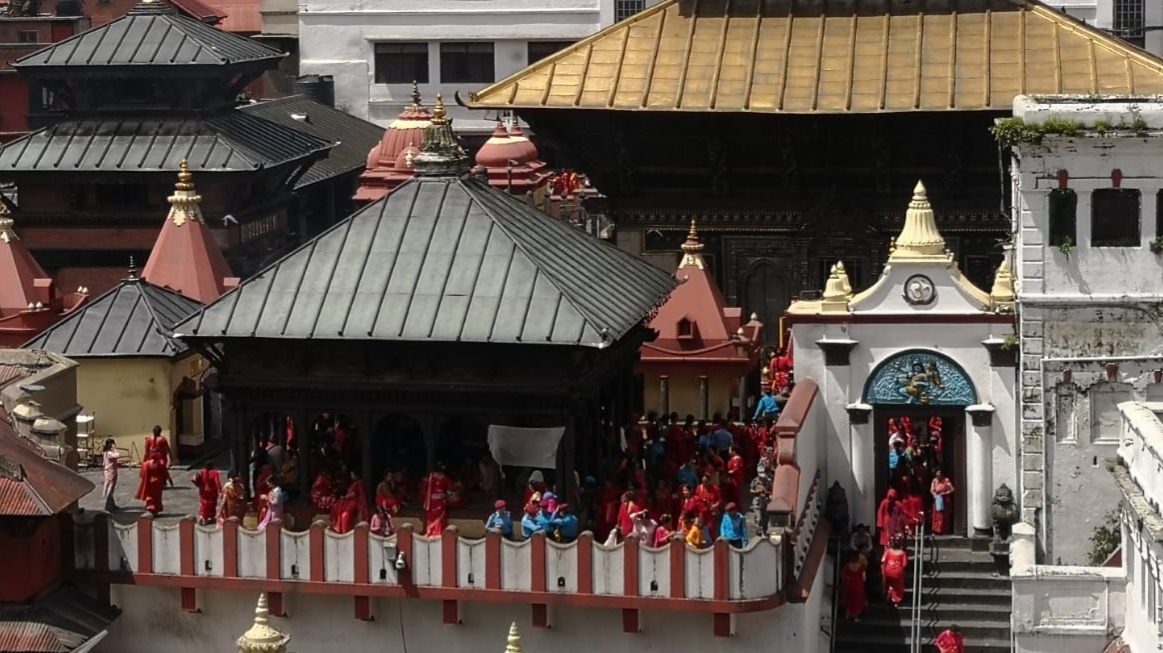
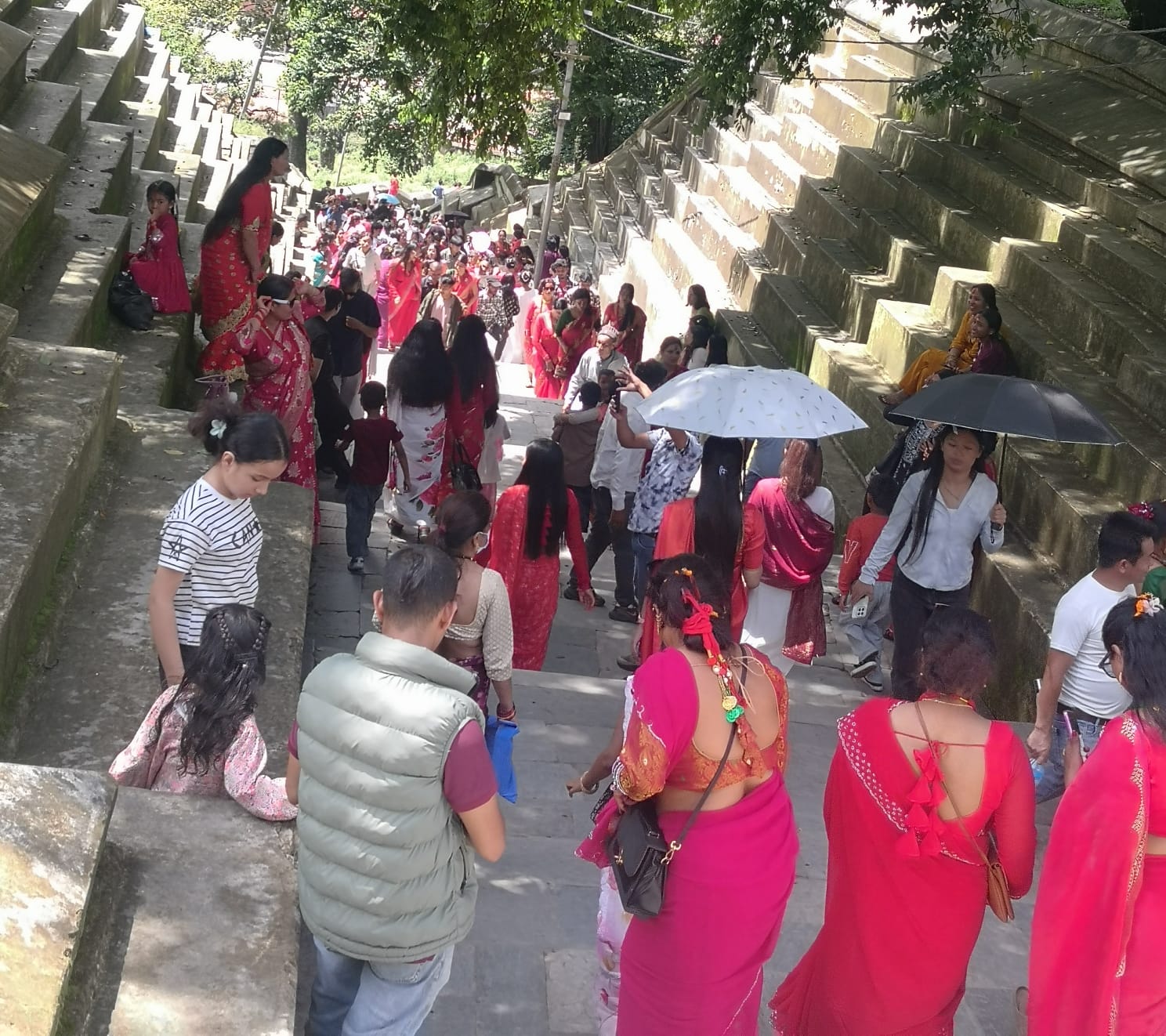
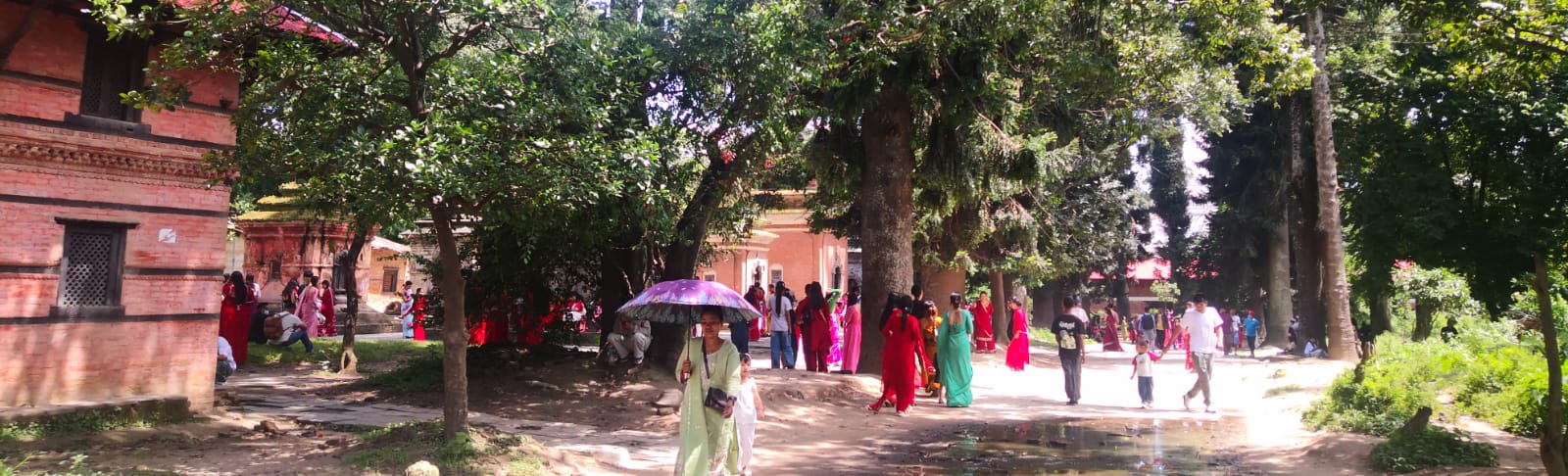
The most famous gathering takes place around Pashupatinath Temple, one of Nepal's most sacred Hindu pilgrimage sites. On Teej, thousands of women come to the Pashupatinath area dressed in red and other traditional colors to offer prayers to Lord Shiva. One can aptly describe Teej at Pashupatinath as a scene where the temple complex and surrounding areas become a "sea of red."
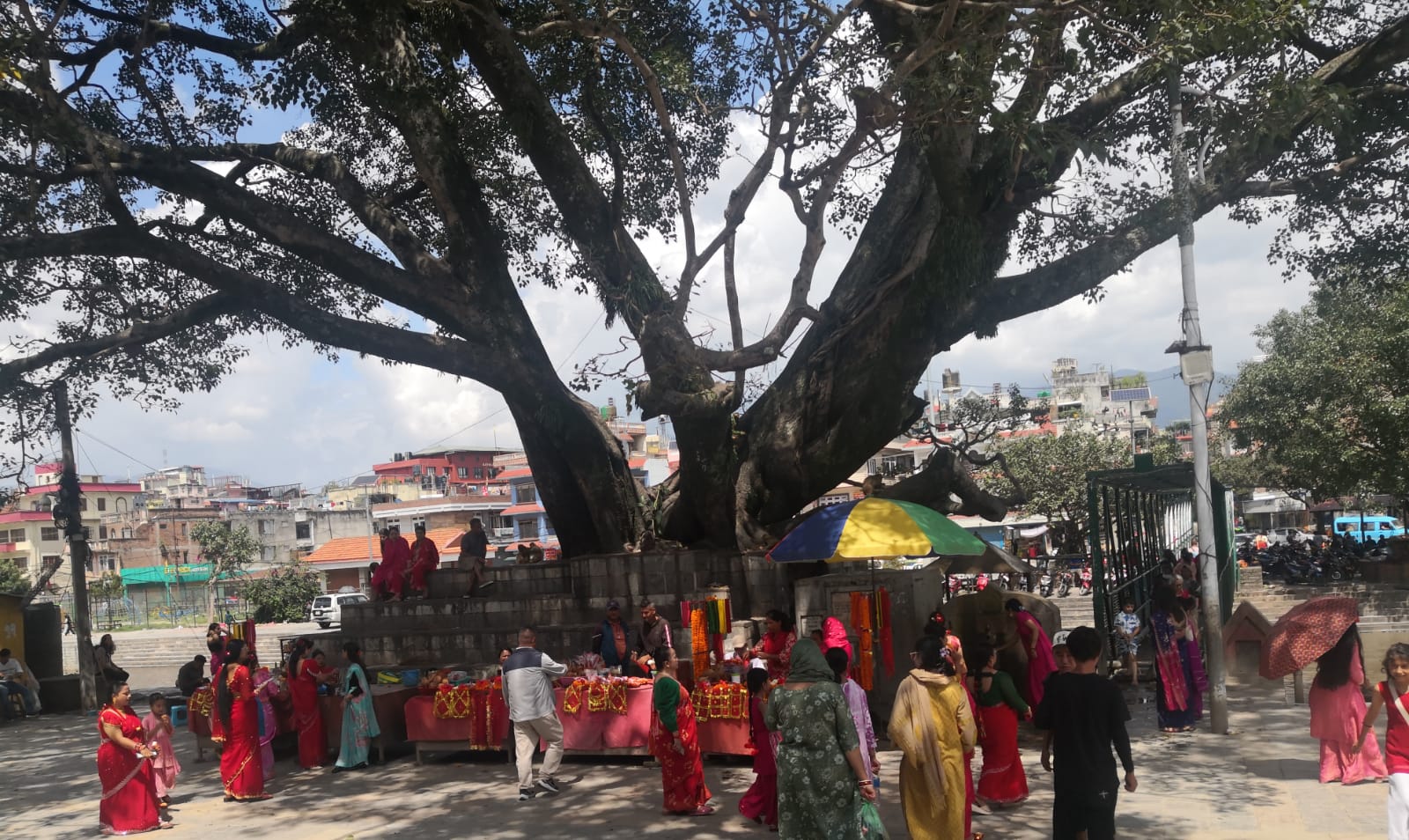
Other temples and historic squares throughout Kathmandu, Lalitpur and Bhaktapur also become lively places of worship and celebration.
For cultural travelers, however, some of the most interesting scenes can be found away from the largest crowds: neighborhood temples, traditional courtyards, community gatherings and family homes where women prepare for the festival, apply mehendi, dress in their finest clothes and gather with friends.
|
|
|
When Is Haritalika Teej Celebrated?
Teej follows the Hindu lunar calendar, so its date changes each year. Haritalika Teej falls on the third day (Tritiya) of the bright fortnight of the month of Bhadra, generally during August or September.
In 2026, Haritalika Teej is being observed on Monday, 14 September. The lunar date began on 13 September and continues into the morning of 14 September, which determines the principal observance this year.
The wider Teej observance is commonly experienced over three days, each with its own character.
Dar Khane Din
The celebration traditionally begins with Dar Khane Din, the day of the Great Feast.
Women gather at their maternal homes or with relatives and friends for a special meal before beginning the fast. There is a particularly warm social atmosphere on this day, with singing, dancing, conversation and feasting.
Dar is more than an ordinary meal. Traditionally, it is the substantial feast eaten before the demanding fast that follows. It also represents the hospitality and affection shared among mothers, daughters, sisters and friends.
In modern Nepal, Dar celebrations may take place at home, in community groups, restaurants, social organizations and workplaces, sometimes several days before the actual Teej day - which doesn't really represent the traditional celebration of the festival but it is as is!
 Haritalika Teej Day
The next day is the principal day of Haritalika Teej.
Women wake early, bathe and dress in their finest clothes before beginning their religious observance. Many wear red saris or red traditional dresses, complemented by green or red bangles, necklaces, earrings, tika, mehendi and other jewelry.
The color red has become strongly associated with Teej and is particularly striking when thousands of women gather together.
The central religious observance is dedicated to Goddess Parvati and God Shiva.
Women visit Shiva temples, make offerings, listen to religious stories and participate in prayers and puja. At Pashupatinath, large numbers of women traditionally gather to worship Lord Shiva. The Pashupati Area Development Trust describes Teej as the great festival of Hindu women, rooted in the story of Parvati's devotion and penance to Shiva.
One of the most demanding aspects of the festival is the fast.
Many women traditionally observe a nirjala fast, meaning they abstain from both food and water for the day or until next day morning. However, fasting practices vary between individuals and families and not every participant observes the strictest form.
The fast is an expression of devotion and religious commitment rather than something visitors should regard simply as a spectacle.
Why Do Women Fast on Teej?
The religious story behind Haritalika Teej is connected with Goddess Parvati's devotion to Lord Shiva.
According to Hindu tradition, Parvati undertook severe penance because she wished to marry Shiva. Her determination and devotion eventually led to their union.
The name Haritalika is traditionally associated with the story in which Parvati's female companion helped her escape to the forest, allowing her to continue her penance rather than accept a marriage she did not want. The story therefore forms an important part of the religious meaning of the festival.
Women observing Teej therefore connect their fasting and prayers with Parvati's devotion.
For married women, the prayers are traditionally associated with the longevity, health and prosperity of their husbands and family. For unmarried women, the observance may be associated with the hope for a good and suitable future husband.
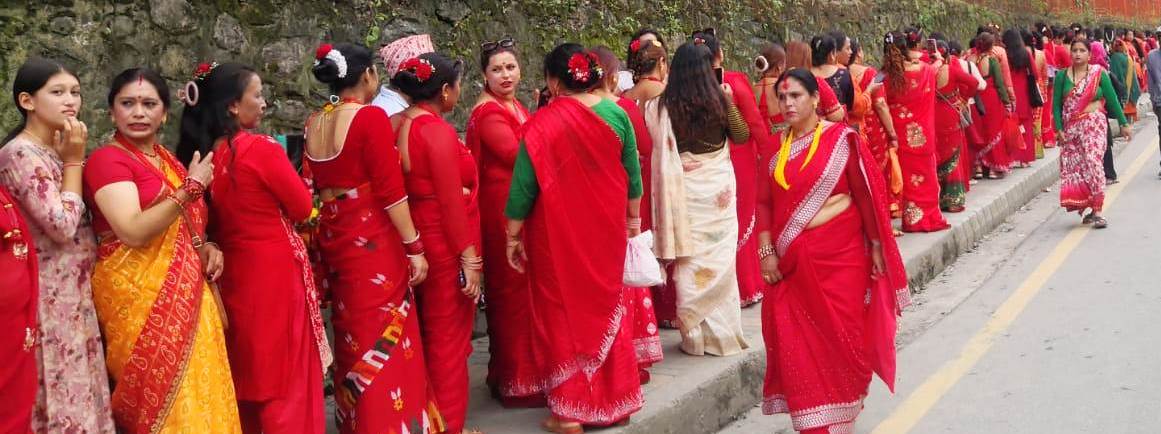 The Red Saree – One of the Most Beautiful Sights of Teej
Perhaps the most immediately recognizable visual feature of Teej is the traditional red sari.
On ordinary days, Kathmandu is already a colorful city. During Teej, however, the appearance of women changes dramatically.
Red saris, red shawls and blouses are accompanied by:
- Green and red glass bangles
- Gold and traditional jewelry
- Tika and sindoor
- Mehendi on hands
- Traditional necklaces
- Earrings and nose ornaments
- Decorative hair arrangements
- Traditional footwear
- Colourful shawls and accessories
Women often dress especially carefully for Teej, making the festival an extraordinary opportunity to see Nepalese traditional fashion in a living cultural setting rather than in a museum.
 Singing, Dancing and the Teej Songs
Teej is also famous for its songs and dancing.
Groups of women gather to sing traditional Teej songs, often accompanied by rhythmic clapping and dancing. Traditionally, these songs have expressed subjects ranging from love, marriage and family relationships to the difficulties of women's lives.
Modern Teej songs have expanded considerably and can also address contemporary social issues, relationships, migration, family life and women's experiences.
This combination of devotion, entertainment and social expression makes Teej different from a purely temple-based religious ceremony.
A visitor may see women move naturally between prayer, singing, dancing, conversation and celebration within the same gathering.
Teej as a Celebration of Sisterhood
Perhaps one of the most beautiful aspects of Teej is the sense of togetherness among women.
A daughter may return to her mother's home from her husband's home or where she has settled life after marriage. All of her sisters might have done the same. so on Teej they return to mother's home and thus sisters meet again. Also friends who have moved to different parts of the city or country gather together. Mothers and daughters share meals, stories and traditions and remain happy!
The festival therefore has an emotional dimension that is difficult to understand simply by watching a religious ceremony.
It is a moment when women come together, often in large groups, to celebrate their relationships with one another.
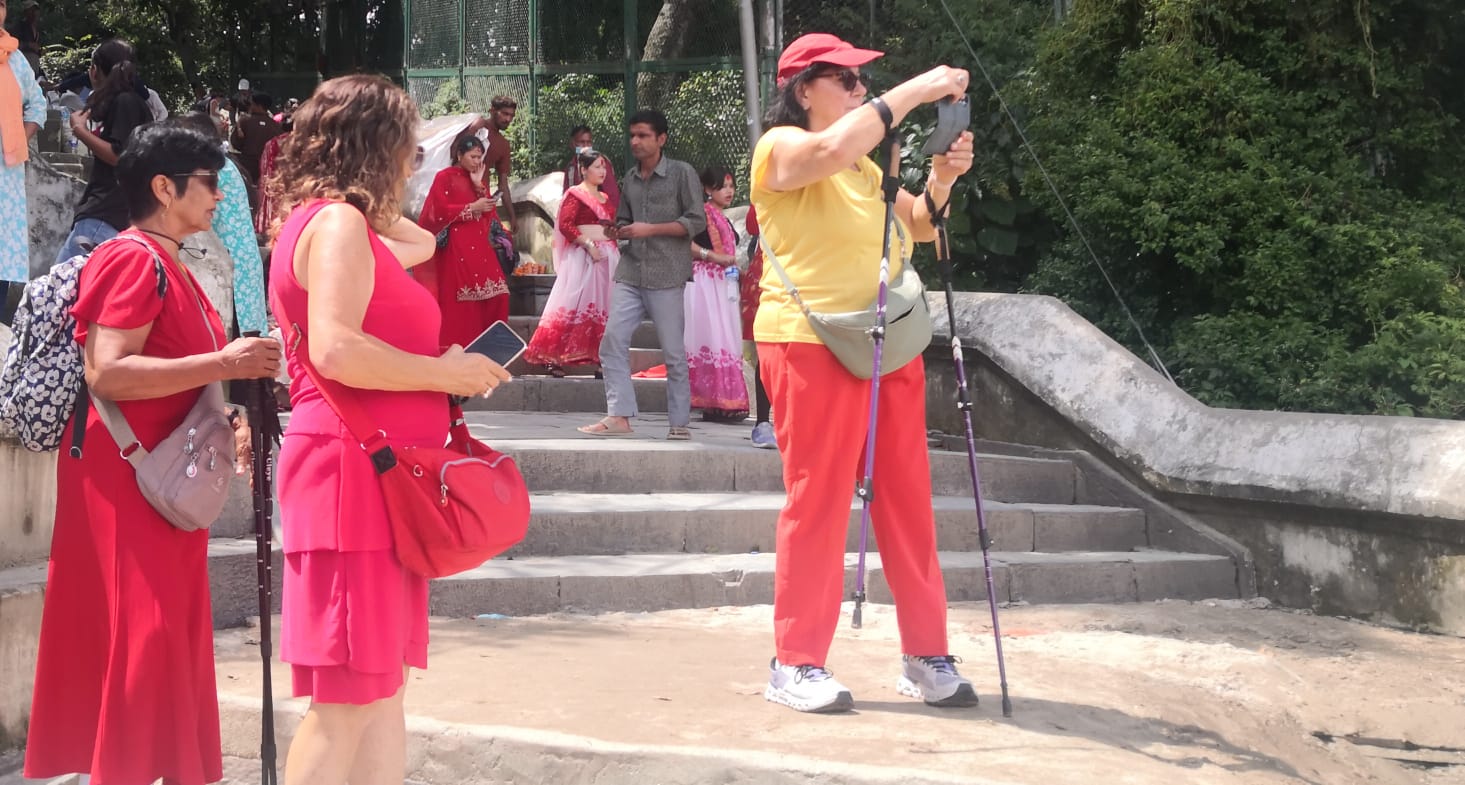 Haritalika Teej and Photography
For photographers and international travelers, Teej presents extraordinary visual opportunities.
A group of women in red saris walking towards a temple, elderly women sitting together in conversation, young women dancing to Teej songs, mehendi-covered hands holding prayer offerings, rows of colorful bangles, traditional jewelry and the red-and-green colors of the festival all provide compelling subjects.
However, photography should always be approached respectfully.
Women participating in Teej are attending a religious and personal celebration, not performing for tourists! Visitors should ask permission before making close-up portraits, particularly when photographing individuals.
At Pashupatinath, visitors must also respect temple regulations. Non-Hindus cannot enter the main temple, and photography is prohibited inside the temple complex. The Nepal Tourism Board specifically notes that cameras are not permitted within the main complex. I don't agree the nun-Hindus stuffs, but it is as is from centuries back.
There are nevertheless excellent opportunities to photograph the atmosphere from permitted public areas and viewpoints around the temple precinct.
The best photograph is not necessarily the closest one. A respectful image showing the wider gathering, colors, architecture and atmosphere can tell the story of Teej beautifully without intruding on someone's private religious moment.
Experiencing Haritalika Teej with Alpine Exodus
At Alpine Exodus, we believe that travelling in Nepal should be more than visiting mountains, temples and monuments. Nepal's real cultural richness is often found in the festivals, family traditions and everyday lives of its people.
For international visitors arriving in Kathmandu around Teej, we can incorporate the festival into a cultural exploration program.
Instead of simply taking clients to see a temple, our Tour Guide team can explain the story behind Teej, its connection with Parvati and Shiva, the meaning of the fasting tradition, the importance of Dar Khane Din and the social significance of women gathering together.
Depending on the festival schedule and local circumstances, the experience may include a visit to the Kathmandu Valley's important temples and permitted viewing areas, followed by an exploration of neighborhood celebrations where visitors can observe the festival in a more natural community setting.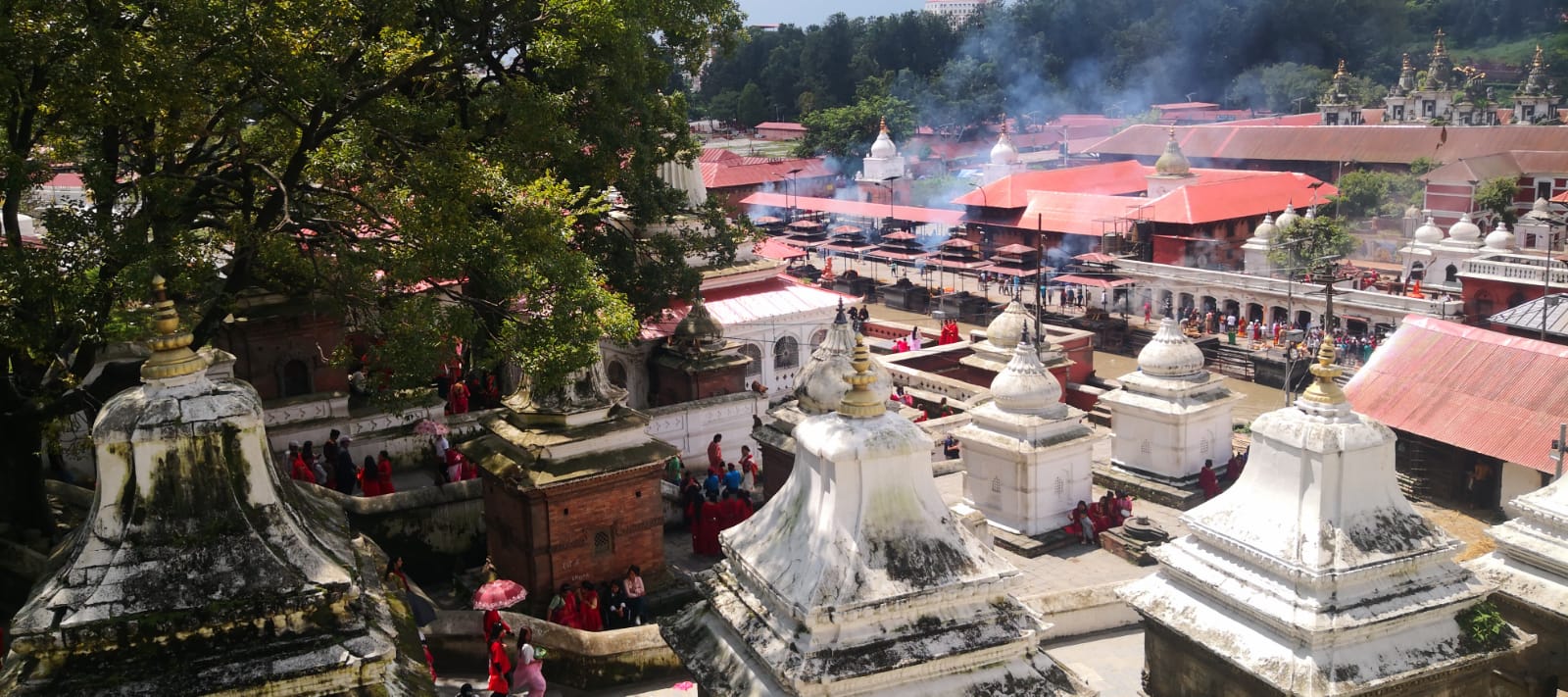
For photography enthusiasts, Teej can be particularly rewarding.
The brilliant red saris, green bangles, traditional jewelry, mehendi, tika, temple architecture and groups of women singing and dancing create an extraordinary visual story. With the guidance of a knowledgeable local escort, photographers can learn where to stand, when photography is appropriate and how to ask permission for portraits, rather than simply pointing a camera into a crowd.
We can also arrange cultural walks through the old neighborhoods of Kathmandu and Lalitpur, where visitors may encounter smaller community celebrations and traditional courtyards away from the largest crowds.
The objective is not to turn Teej into a tourist show.
It is to allow our international guests to observe, understand and respectfully experience a festival that is deeply meaningful to Nepali women.
For Alpine Exodus, this is what cultural travel in Nepal should be about: meeting Nepal through its people, understanding the stories behind its traditions and taking home photographs that carry a story rather than simply a beautiful image.
Teej – A Different Side of Nepal
Most international visitors come to Nepal dreaming of Everest, Annapurna, ancient temples and Himalayan landscapes. These are undoubtedly extraordinary parts of the country.
But festivals such as Haritalika Teej reveal another Nepal and Nepalese tradition.
It is the Nepal of mothers and daughters, sisters and friends; of red saris and green bangles; of songs echoing through temple courtyards; of devotion, laughter, fasting and celebration.
For a traveler willing to look beyond the usual sightseeing program, Haritalika Teej offers an intimate glimpse into Nepalese women's culture and one of the country's most vibrant living traditions.
And that is precisely the kind of cultural experience that can turn a visit to Nepal into a much deeper journey.