Krishna Janamasthami in Nepal; a Day of Devotion, Stories and Living Cultural Heritage
There are days in Nepal when religion, history, art and everyday life come together so naturally that it is difficult to separate one from another. Krishna Janmashtami, the sacred birthday of Lord Krishna, is one of those days.
 Observed on Bhadra Krishna Ashtami, the eighth day of the dark fortnight of the month of Bhadra, Janmashtami is celebrated with deep devotion by Hindus throughout Nepal and across the world by the Krishna Pranami. For devotees, it is a day to remember the birth and teachings of Lord Krishna—the beloved deity of compassion, wisdom, courage, love and righteousness.
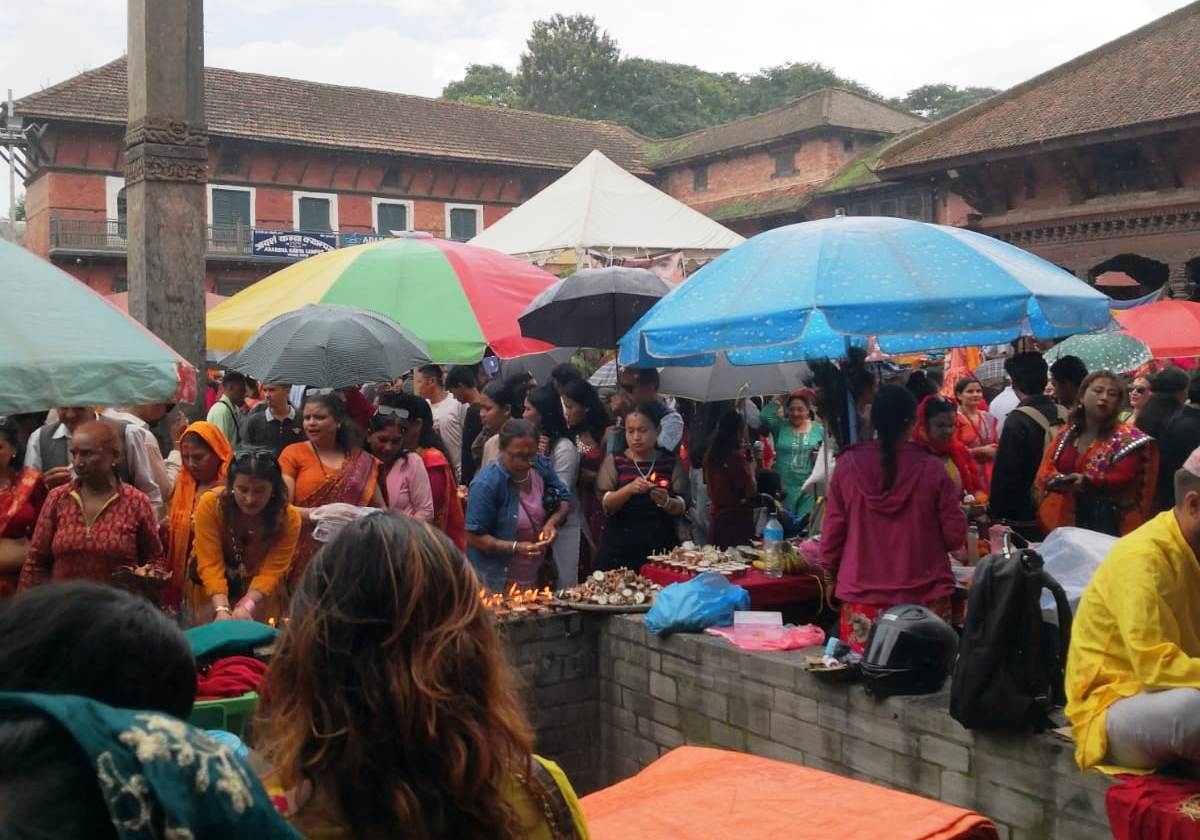
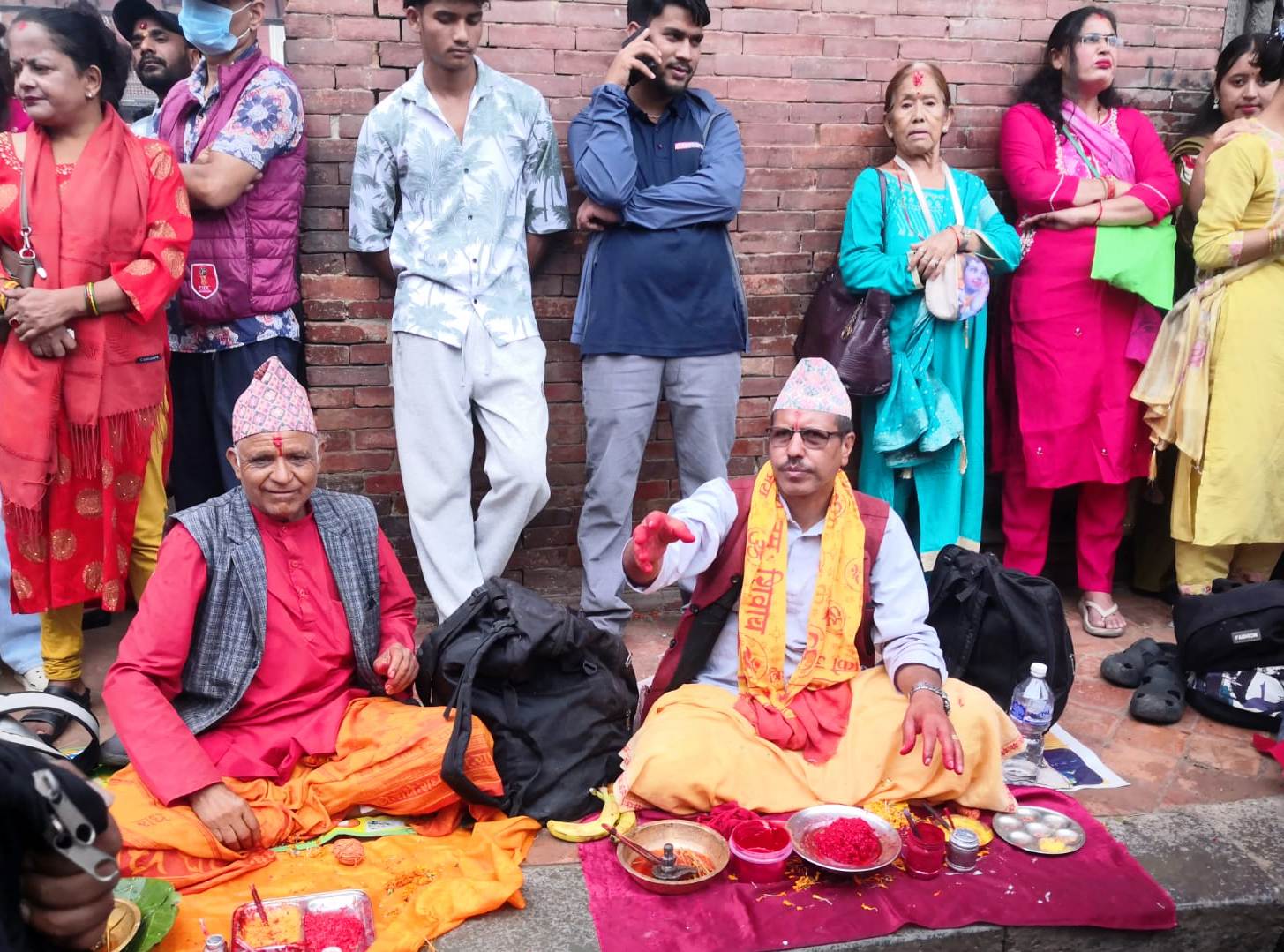
On this special day, people visit temples, observe fasting, offer prayers and prepare foods believed to be dear to Lord Krishna. Beautiful flowers, fruits, sweets, clothes and other offerings are presented with devotion. As the day progresses, temples become increasingly lively and by evening, the celebration takes on an especially spiritual atmosphere.
|
|
|
Janmashtami in the Nepali Home
Janmashtami is not confined to temples. In many Hindu households, the evening is reserved for Krishna Puja and devotional gatherings.
Families decorate their prayer rooms and create a special place for Lord Krishna. Offerings of fruits, sweets and other traditional foods are prepared, flowers are arranged and lamps are lit. A priest may be invited to conduct the puja and recite sacred stories from the life of Krishna.
And those stories are never merely stories.
They carry lessons about courage, friendship, duty, love, wisdom and the struggle between righteousness and wrongdoing.
From the miraculous birth of Krishna and his childhood adventures in Gokul and Vrindavan, to his confrontation with the tyrannical King Kansa, Krishna's life unfolds through stories that have been told and retold for generations.
His connection with the Pandavas and his role in the great Mahabharata are equally important. As the charioteer and guide of Arjuna, Krishna delivers the profound teachings of the Bhagavad Gita, reminding humanity of the importance of duty, righteous action and maintaining one's inner balance.
Krishna's Adventures—and the Lessons Within Them
Perhaps one of the most fascinating aspects of Krishna's story is the extraordinary range of his life.
There are stories of his mischievous childhood, his love of butter, his flute, his friendships, his beloved Radha and the Gopis and the enchanting world of Vrindavan. These stories of Krishna's love and playful adventures have inspired generations of poets, musicians, painters and devotees.
Yet beneath the romance and playfulness are deeper lessons.
Krishna's stories speak about love without possession, devotion without expectation, courage in the face of injustice and the responsibility to stand for what is right.
That is perhaps why Krishna remains such a beloved figure—not simply as a deity of worship, but as a character whose teachings continue to find meaning in ordinary human life.
Janmashtami at Krishna Temple, Mangalbazaar, Patan
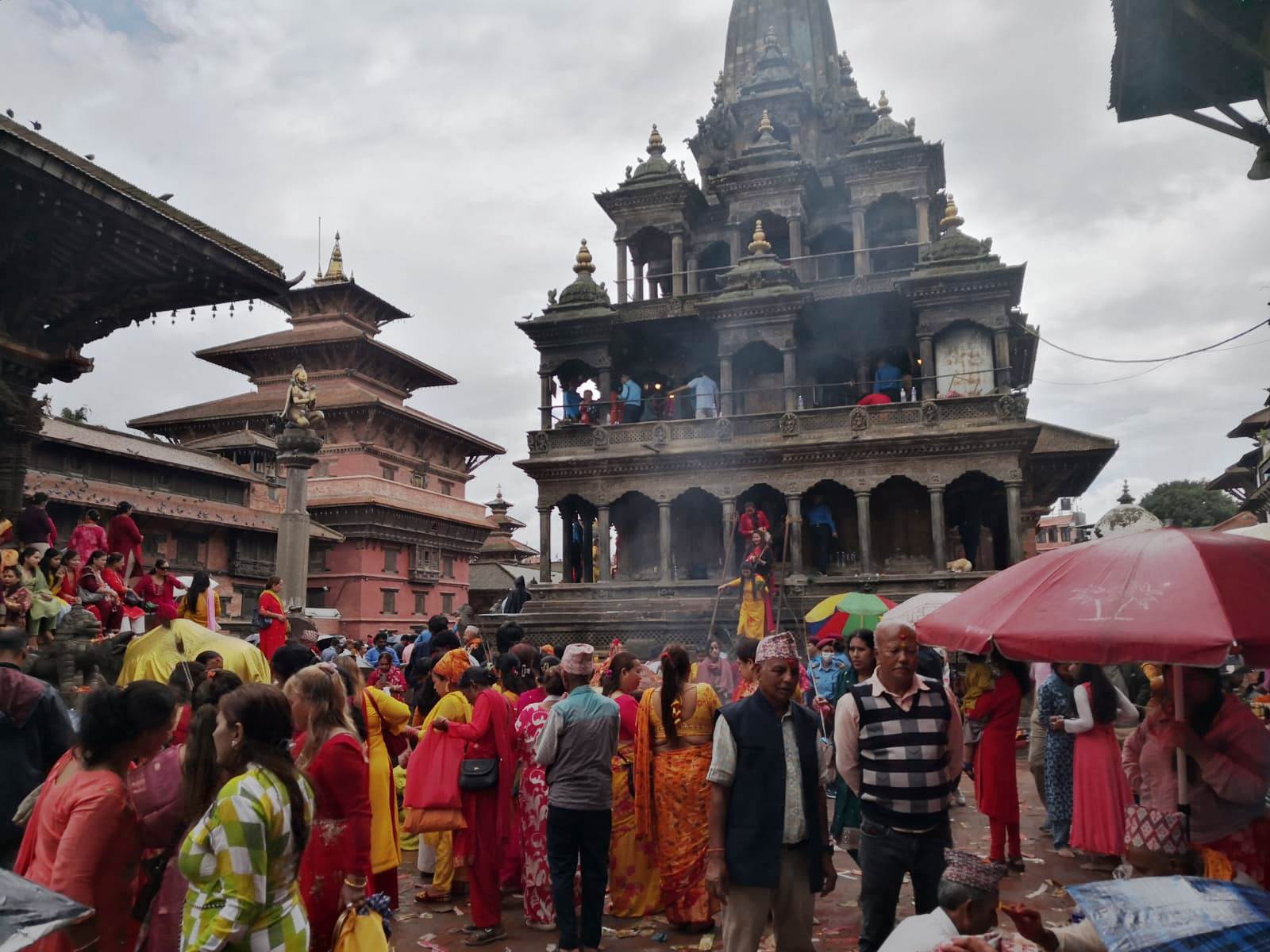
This year, I visited the Krishna Temple in Patan Durbar Square on Janmashtami.
|
|
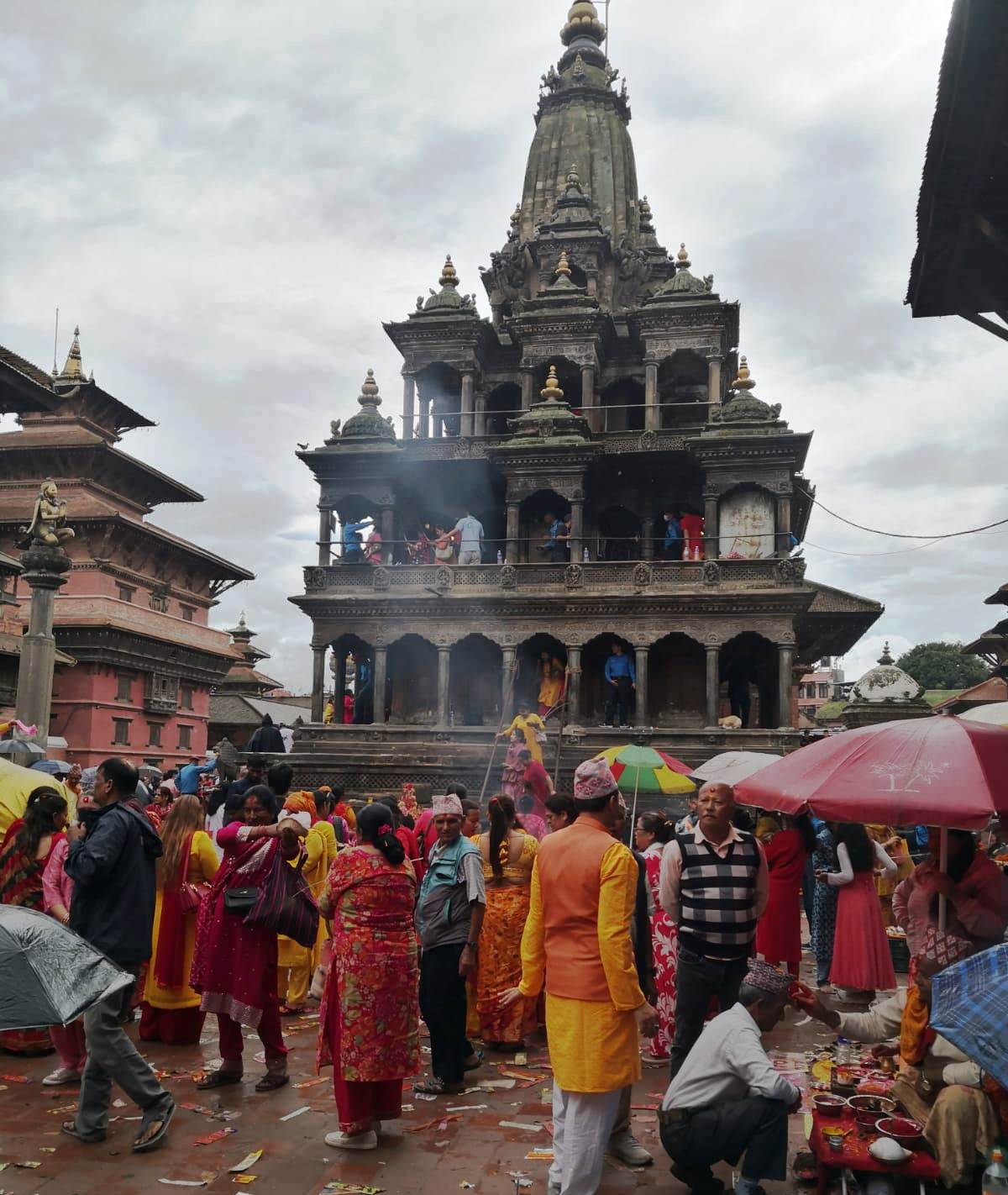
The atmosphere was extraordinary.
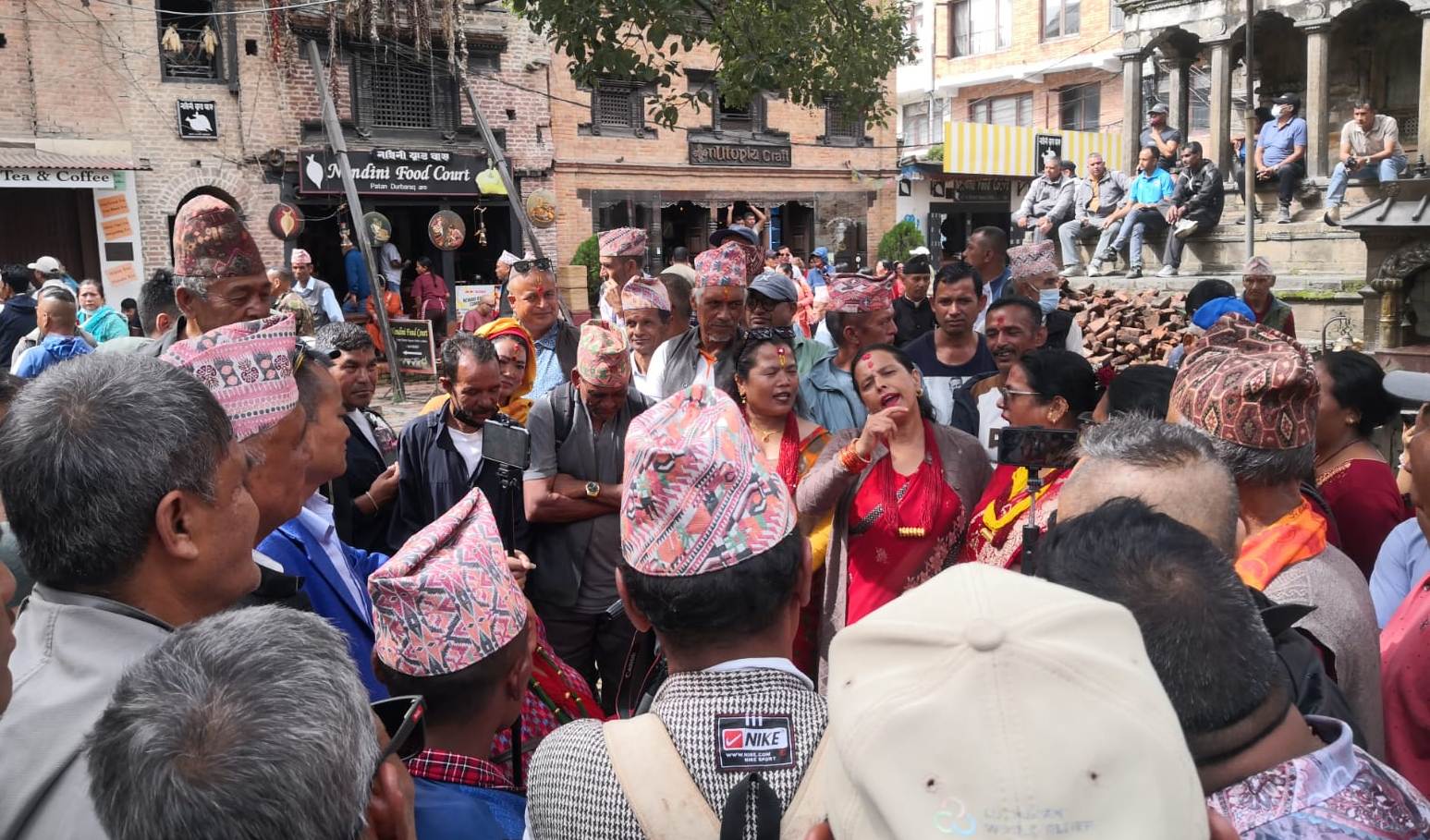
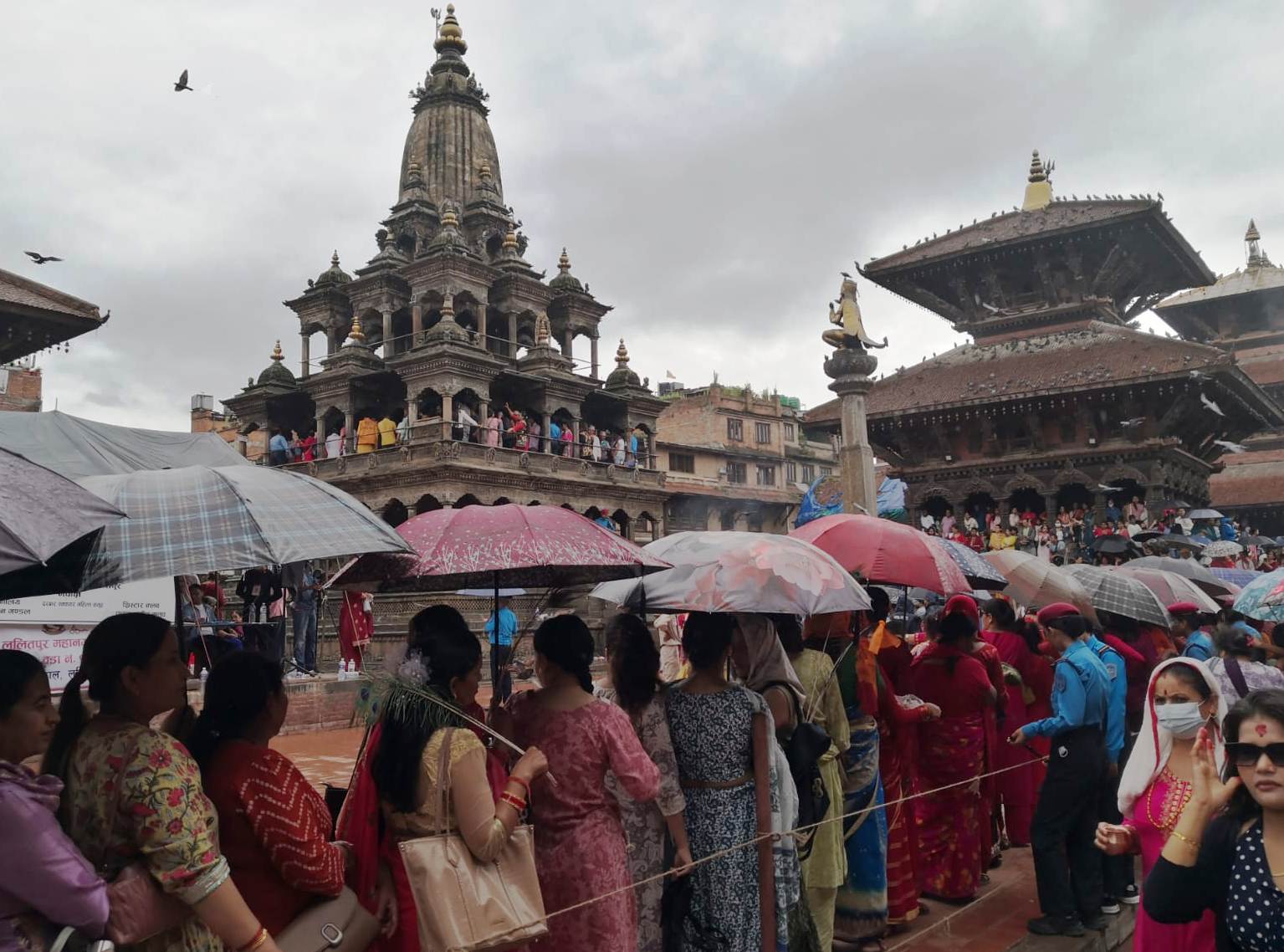
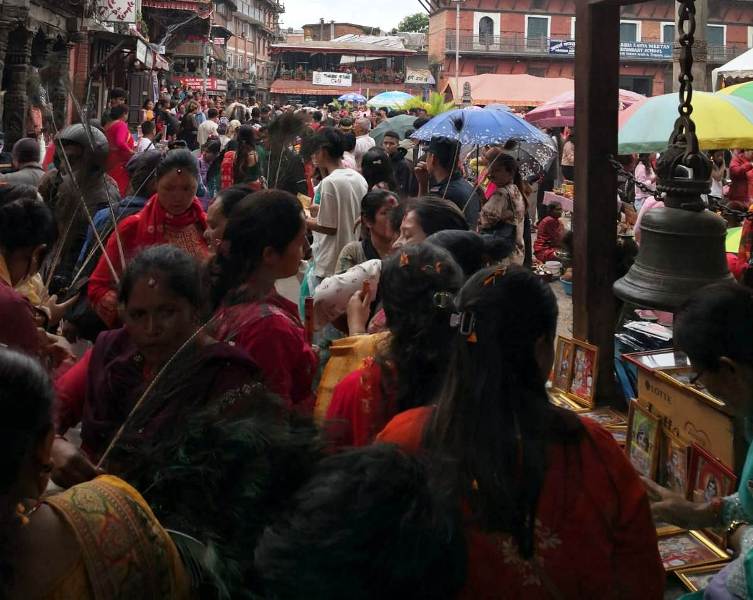
The temple and surrounding square were filled with devotees and onlookers. People came dressed for the occasion, some carrying flowers and offerings, others simply coming to witness the festival and experience the spiritual energy of the day.
There was a wonderful mixture of devotion and curiosity.
For local devotees, this was a deeply meaningful religious occasion. For visitors and photographers, it was also an opportunity to witness one of Nepal's most vibrant living cultural traditions.
The historic architecture of Patan Durbar Square provided an extraordinary setting for the celebration. The stone temple, ancient courtyards and traditional Newari surroundings seemed to become part of the festival itself.
Seeing Janmashtami from Above
|
|
|
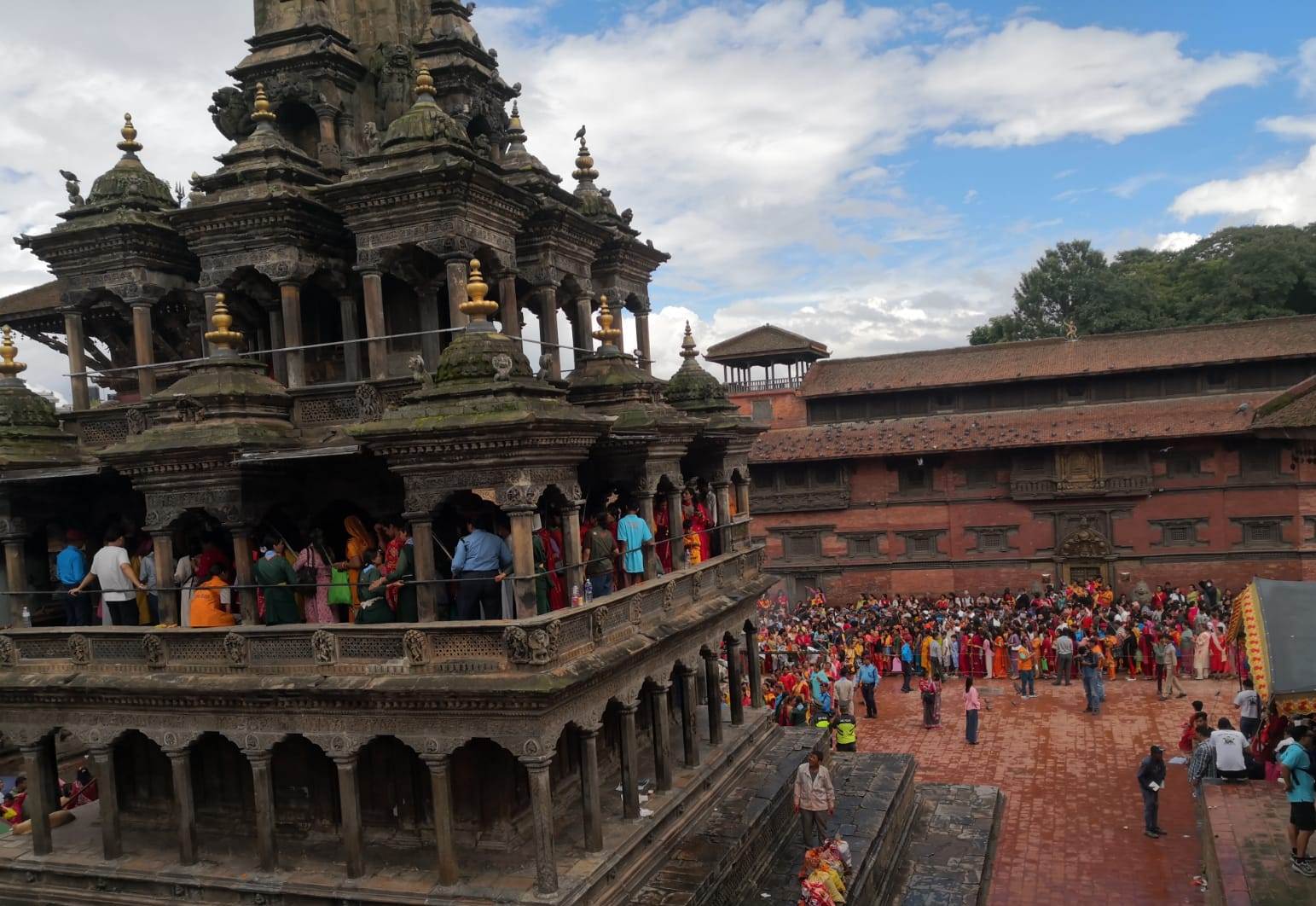
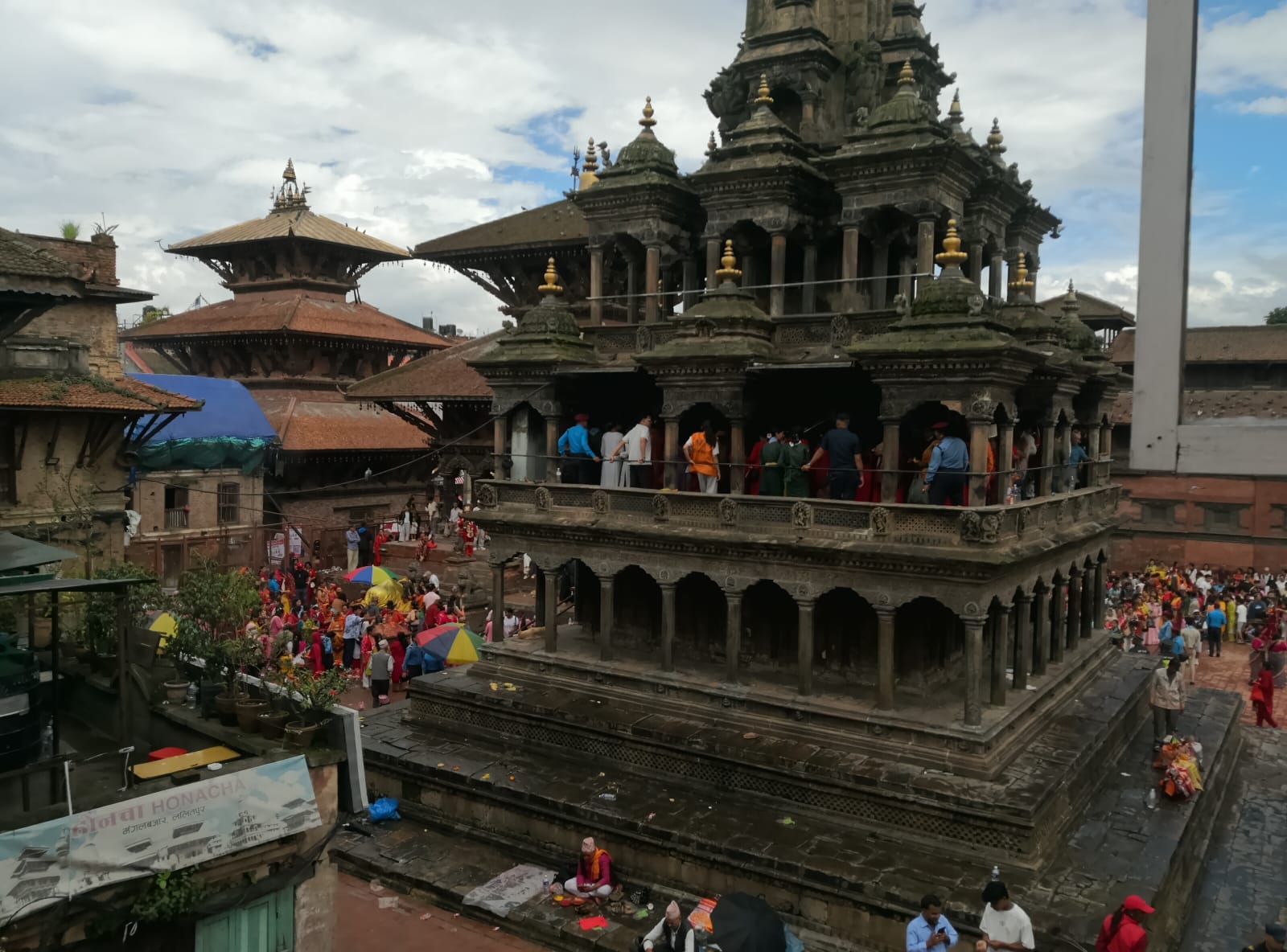
With so many people gathered around the temple, I wanted to find a different perspective.
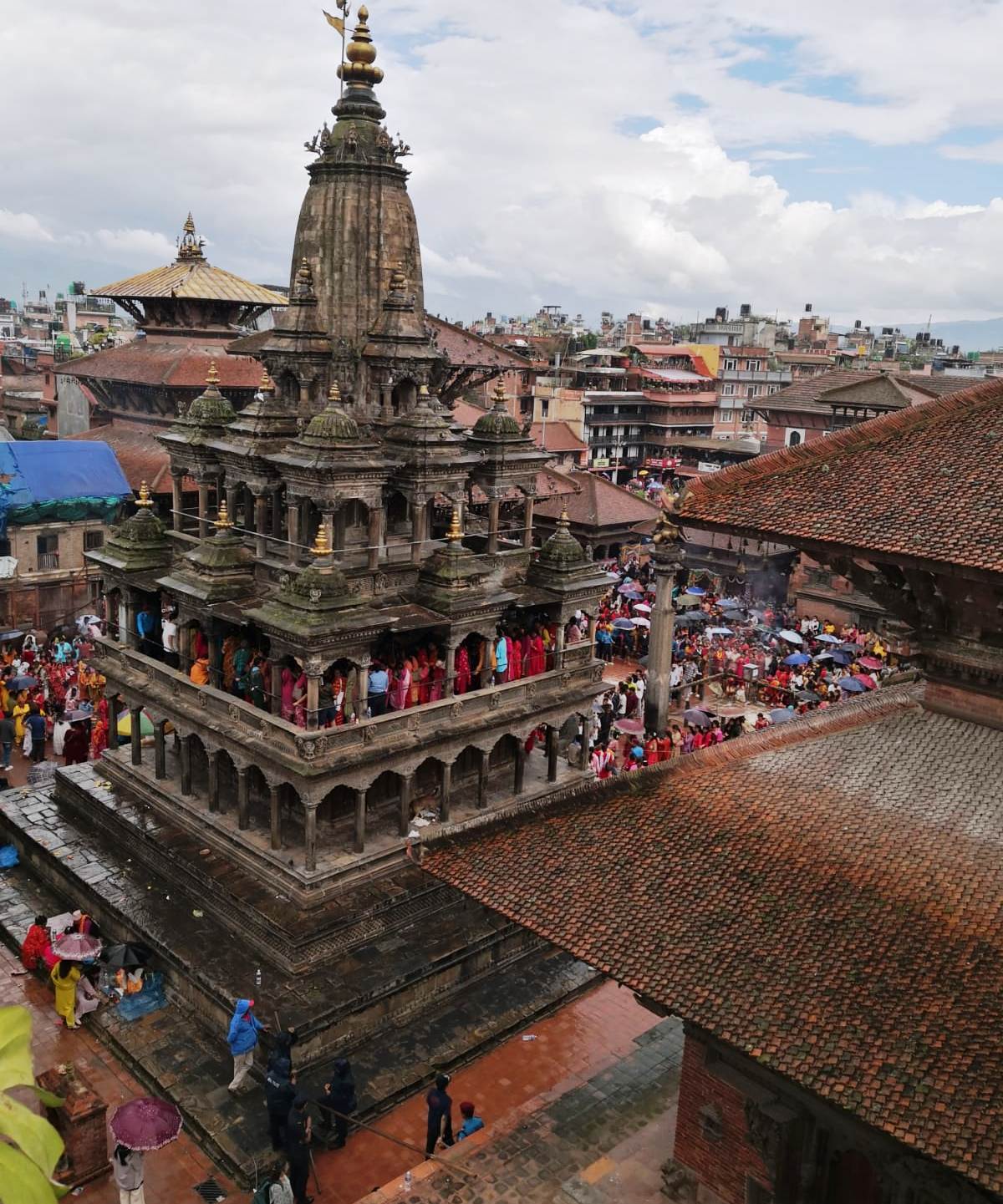
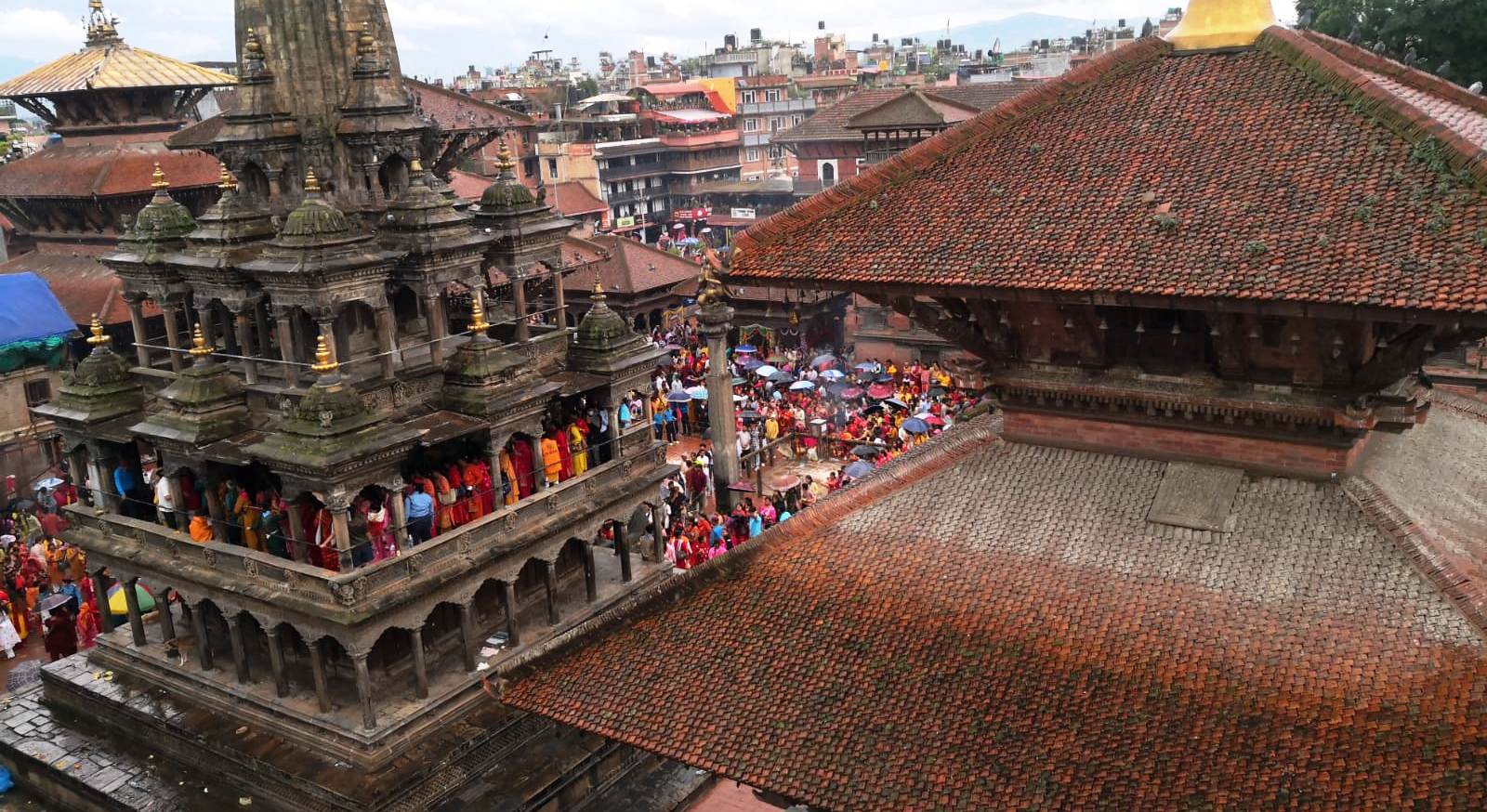
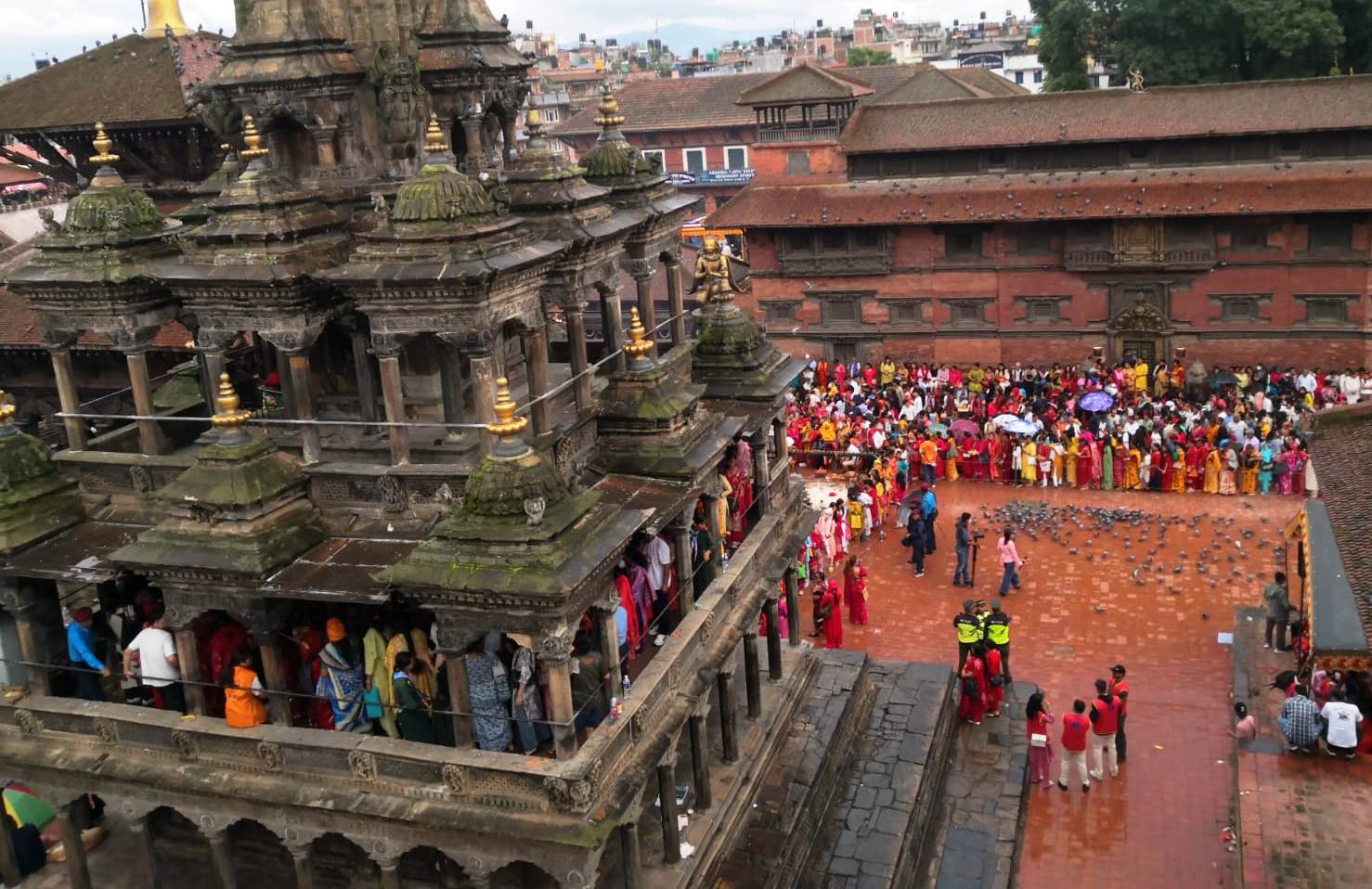
I climbed to a nearby restaurant and from there I discovered some wonderfully different angles of the celebration.
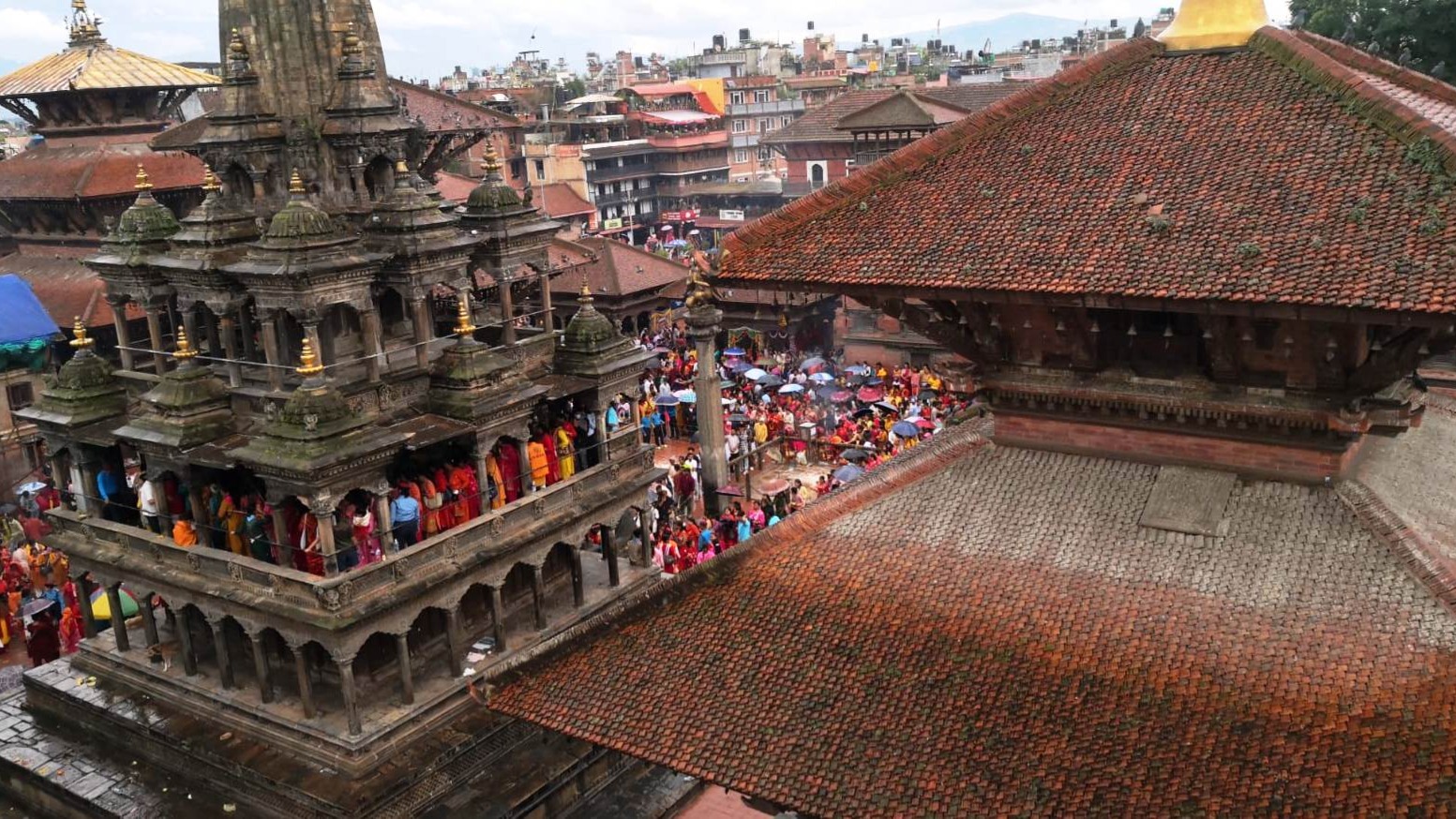
Looking down from above, the scene changed completely.
The temple stood at the heart of the gathering while streams of people moved through the surrounding square. Devotees waited (queued) patiently, groups gathered together and the historic buildings framed the colorful human movement below.
It was one of those moments when a familiar place suddenly looks completely different.
From ground level, you feel the crowd.
From above, you see the whole celebration.
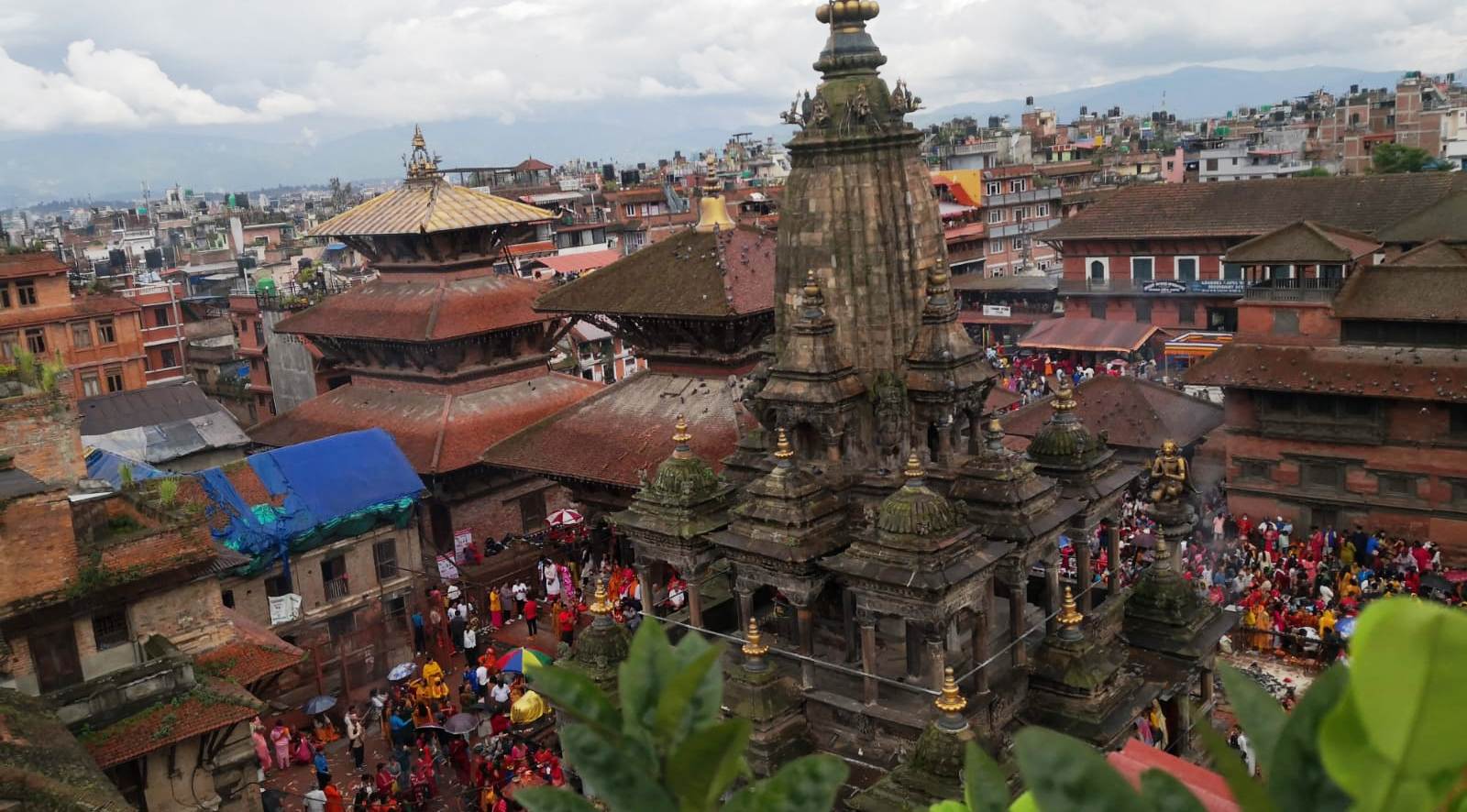
And through a camera lens, you begin to notice the small details—the expressions of devotees, the flowers, the traditional architecture, the colors of clothing and the extraordinary concentration of people gathered for a single spiritual purpose.
These are the moments that make travelling through Nepal so rewarding.
A Festival Where Faith Meets Heritage
|
|
Patan is already one of the finest places in Nepal to experience history, architecture and Newar culture. But on Janmashtami, Patan Durbar Square becomes something more than a historical monument.
It becomes a living cultural space.
The ancient Krishna Temple is not simply something to photograph. It is a place where generations of people continue to return, year after year, to pray, make offerings and celebrate the birth of Lord Krishna.
That continuity is what makes Nepal's festivals so fascinating.
Here, culture is not preserved only inside museums or history books. It is practiced in homes, courtyards, temples and public squares. Children grow up watching their parents celebrate and they eventually bring their own children to the same places.
The traditions continue.
Experiencing Nepal Beyond the Mountains
For travelers visiting Nepal, festivals such as Krishna Janmashtami offer another way to discover the country.
Nepal is famous around the world for Everest, Annapurna, trekking and Himalayan adventure. But its cultural richness is equally remarkable. A visit to Kathmandu Valley during a major festival can reveal a side of Nepal that cannot be understood simply by visiting monuments on an ordinary day.
The sounds of prayers, temple bells and devotional music; the fragrance of flowers and incense; the colors of traditional clothing; the crowds of pilgrims and the ancient architecture surrounding it all create an experience that belongs uniquely to Nepal.
And Patan is one of the best places to experience it.
My Krishna Janmashtami in Patan
Standing above the crowded Krishna Temple and looking across Patan Durbar Square, I found myself thinking about how much history these old courtyards have witnessed.
For centuries, people have gathered here to celebrate, pray and tell the stories of their gods and heroes.
This year's Janmashtami was another chapter in that long tradition.
I was there with my camera, looking for photographs.
But beyond the photographs, what stayed with me was the atmosphere - the devotion of the people, the beauty of the setting and the feeling of witnessing a tradition that remains very much alive.
Perhaps that is the real beauty of travelling in Nepal.
Sometimes, you do not have to go far.
You simply have to be present at the right place, on the right day and allow Nepal to tell you it’s story.
Happy Krishna Janmashtami. Jai Shri Krishna!
|