
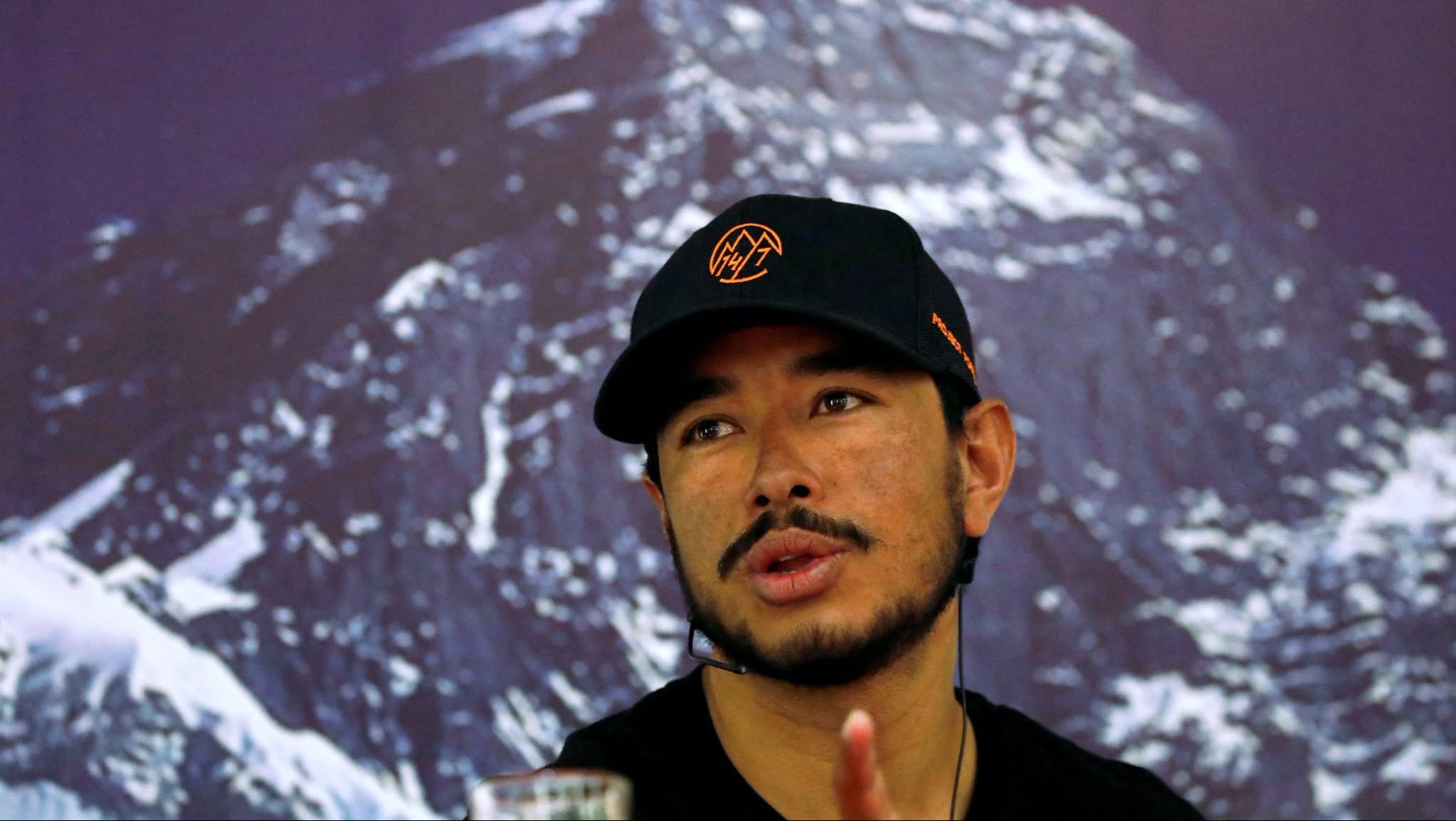
Nimsdai Purja: The Man Who Redefined Human Possibility in the World's Highest Mountains
"Impossible is only a word until someone proves otherwise." Few people have embodied this philosophy more convincingly than Nirmal "Nimsdai" Purja. Soldier, mountaineer, skydiver, paraglider, rescue specialist, entrepreneur and visionary, Nimsdai transformed the landscape of Himalayan mountaineering in little more than a decade. His extraordinary achievements not only rewrote world records but also elevated the reputation of Nepal's climbers and expedition professionals to unprecedented heights.
His remarkable life came to a tragic end during an expedition on Broad Peak in Pakistan in 2026 July. Yet his legacy continues to inspire climbers, adventurers and dreamers across the world. His story is not merely about climbing mountains—it is about courage, discipline, leadership and believing that no dream is too ambitious.
Humble Beginnings
Nirmal Purja MBE was born on 25 July 1983 into a Magar family with deep roots in Nepal. Although his family originated from the Myagdi District in western Nepal, he spent much of his childhood in Chitwan after his father, who had served as a Gurkha soldier, settled there.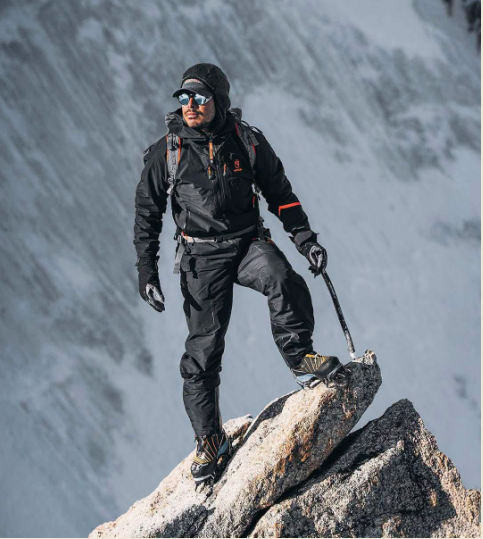
Life was simple. Like countless children growing up in rural Nepal, Nirmal learned the value of hard work, perseverance and resilience from an early age. The mountains were always present on the horizon, but few could have imagined that one day he would become one of the greatest high-altitude mountaineers in history.
His upbringing instilled humility, discipline and respect—qualities that would later define his leadership in some of the world's harshest environments.
From Gurkha Soldier to Britain's Elite Special Forces
Before becoming a mountaineer, Nirmal Purja built an exceptional military career.
He joined the Brigade of Gurkhas in the British Army while still a young man, following the proud tradition of many Nepali families. Military life demanded physical endurance, unwavering discipline and absolute commitment. He quickly earned a reputation for determination and professionalism.
His greatest military achievement came when he passed the exceptionally demanding selection process for the United Kingdom's Special Boat Service (SBS), one of the world's most elite special forces units. Very few soldiers complete the course, and even fewer Gurkhas have ever reached this level.
Years of special forces service shaped his mindset more than anything else. He often explained that the mountains are conquered first in the mind and only then by the body. His military training taught him invaluable lessons:
Stay calm under extreme pressure.
Make sound decisions in life-threatening situations.
Trust teamwork above individual glory.
Lead by example.
Never stop until every possible option has been exhausted.
These principles later saved numerous lives during high-altitude rescue missions across the Himalaya.
Discovering a New Calling
Although physically gifted, Nirmal Purja did not begin serious mountaineering until relatively late compared with many elite climbers.
Once introduced to Himalayan climbing, his progress was astonishing. Every expedition became another opportunity to test his limits. He quickly realised that his military training gave him an enormous advantage in managing risk, making rapid decisions and functioning efficiently at extreme altitude.
The world's highest mountains became his new battlefield—not against enemies, but against weather, altitude and the limits of human endurance.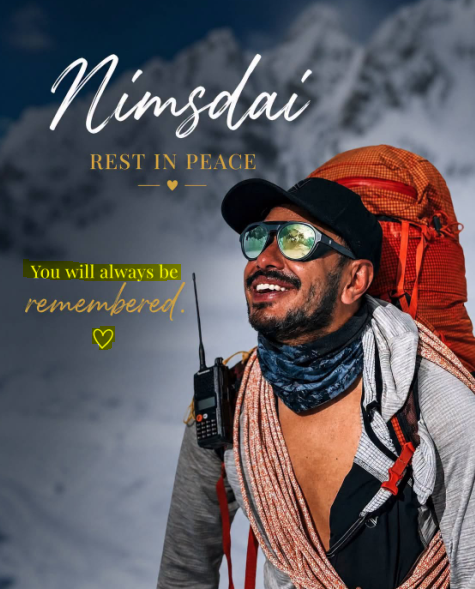
Project Possible: Making the Impossible Possible
In 2019, Nimsdai announced a goal that many considered unrealistic.
He planned to climb all fourteen of the world's 8,000-metre peaks in less than seven months.
At the time, the existing world record stood at nearly eight years.
The mountaineering community reacted with disbelief.
Yet Nimsdai was determined. Supported by an outstanding team of Nepali climbers, Sherpas and expedition professionals, he travelled continuously between Nepal, Pakistan and Tibet.
The 14 Peaks Summit Dates (2019 Record)
- Annapurna (8091m/26545ft, Nepal): April 23, 2019,
- Dhaulagiri (8167m/26795ft, Nepal): May 12, 2019,
- Kangchenjunga (8586m/28,169ft, Nepal): May 15, 2019,
- Mount Everest (8848m/29,032ft, Nepal): May 22, 2019,
- Lhotse (8516m/27940ft, Nepal): May 22, 2019,
- Makalu (8485m/27838ft, Nepal): May 24, 2019,
- Nanga Parbat (8125m/26657ft, Pakistan): July 3, 2019,
- Gasherbrum I (8080m/26509ft, Pakistan/China): July 15, 2019,
- Gasherbrum II (8034m/26358ft, Pakistan/China): July 18, 2019,
- K2 (8,611 m / 28251ft, Pakistan/China): July 24, 2019,
- Broad Peak (8051m/26414ft, Pakistan/China): July 26, 2019,
- Cho Oyu (8188m/26864ft, China/Nepal): September 23, 2019,
- Manaslu (8163m/26781ft, Nepal): September 27, 2019,
- Shishapangma (8027m/26335ft, China): October 29, 2019
And all the remaining giants.
After only 189 days, he stood atop the final summit and shattered one of mountaineering's most respected records. What had taken previous climbers years had been completed in just over six months.
The achievement became known worldwide as Project Possible, proving that determination, preparation and teamwork could redefine the boundaries of human performance.
More Than Records
Although famous for speed, Nimsdai repeatedly demonstrated that human life was always more important than personal achievement.
Throughout his climbing career he participated in numerous high-altitude rescue operations, often abandoning his own summit objectives to save stranded climbers.
Several rescues on Annapurna, Everest and other Himalayan peaks attracted international attention because few people are capable of operating effectively in the "death zone" above 8,000 metres.
These actions reflected the values instilled during his years in special forces: leadership, courage and responsibility.
Beyond Mountaineering
Adventure for Nimsdai was never confined to climbing.
He developed expertise in skydiving, paragliding and other demanding outdoor pursuits that required exceptional physical conditioning, mental focus and precise decision-making.
Whether descending from the sky or ascending the world's highest peaks, he continually sought new ways to challenge himself while inspiring others to push beyond perceived limitations.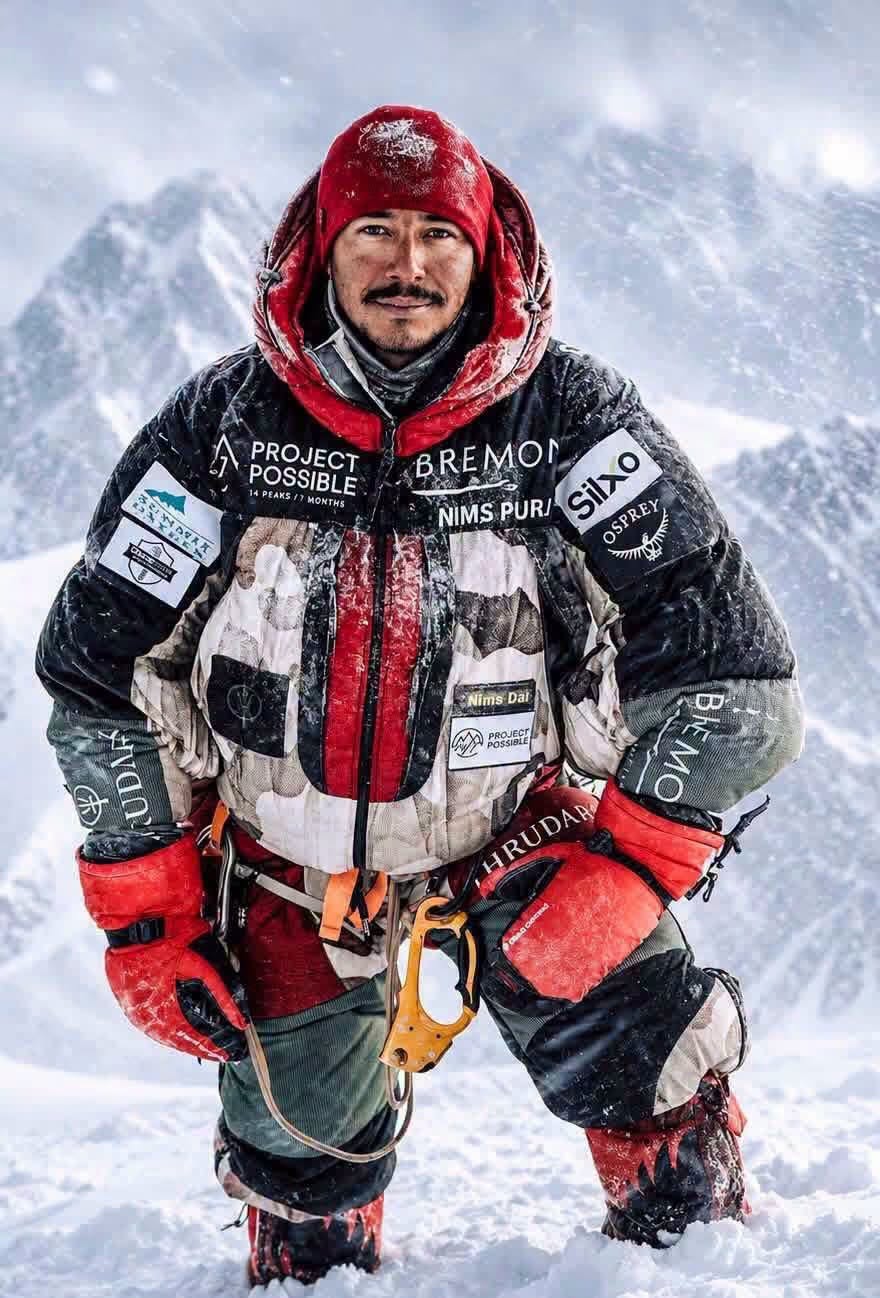
Elevating Nepal's Mountaineering Industry
Perhaps Nimsdai's greatest contribution extended beyond his personal achievements.
For many decades, international expedition companies often acted as intermediaries between foreign climbers and the highly skilled Nepali workforce that made Himalayan expeditions possible.
Recognising the immense expertise within Nepal, Nimsdai established his own expedition company, Elite Exped.
His vision was straightforward yet transformative: enable international climbers to work directly with a Nepali-owned expedition company offering world-class logistics, guiding and safety.
This model showcased Nepal's ability to organise elite expeditions at the highest professional standards. It also created greater opportunities and recognition for Nepali guides, Sherpas, logistics experts and support staff.
Today, many Nepali-owned companies have gained increased international visibility, helping ensure that more value from Himalayan expeditions remains within Nepal and benefits local communities.
A Second Chapter of Greatness
For many climbers, Project Possible would have represented the pinnacle of a lifetime.
For Nimsdai, it was only the beginning.
He continued climbing the world's highest mountains, pursuing increasingly difficult objectives, including multiple ascents of 8,000-metre peaks and expeditions completed without supplemental oxygen.
His total number of successful ascents of the world's highest mountains reached a level never before achieved.
Many within the mountaineering community believed he was on course to accomplish another extraordinary milestone: climbing all fourteen 8,000-metre peaks for a second time under even more demanding conditions. Had he succeeded, many experts felt that such a record could have remained unmatched for decades, perhaps even half a century.
His ambition was never driven solely by statistics. He sought continually to explore the limits of human capability while inspiring others to believe that extraordinary goals can become reality through discipline and perseverance.
The Tragedy on Broad Peak
In 2026, tragedy struck during an expedition on Broad Peak in Pakistan.
An avalanche swept through the mountain, claiming the lives of Nirmal Purja and several members of the expedition.
The news shocked Nepal and the international climbing community. Tributes poured in from fellow mountaineers, military colleagues and admirers around the world.
The loss was profound. Nepal had lost one of its brightest ambassadors, and mountaineering had lost one of its boldest pioneers.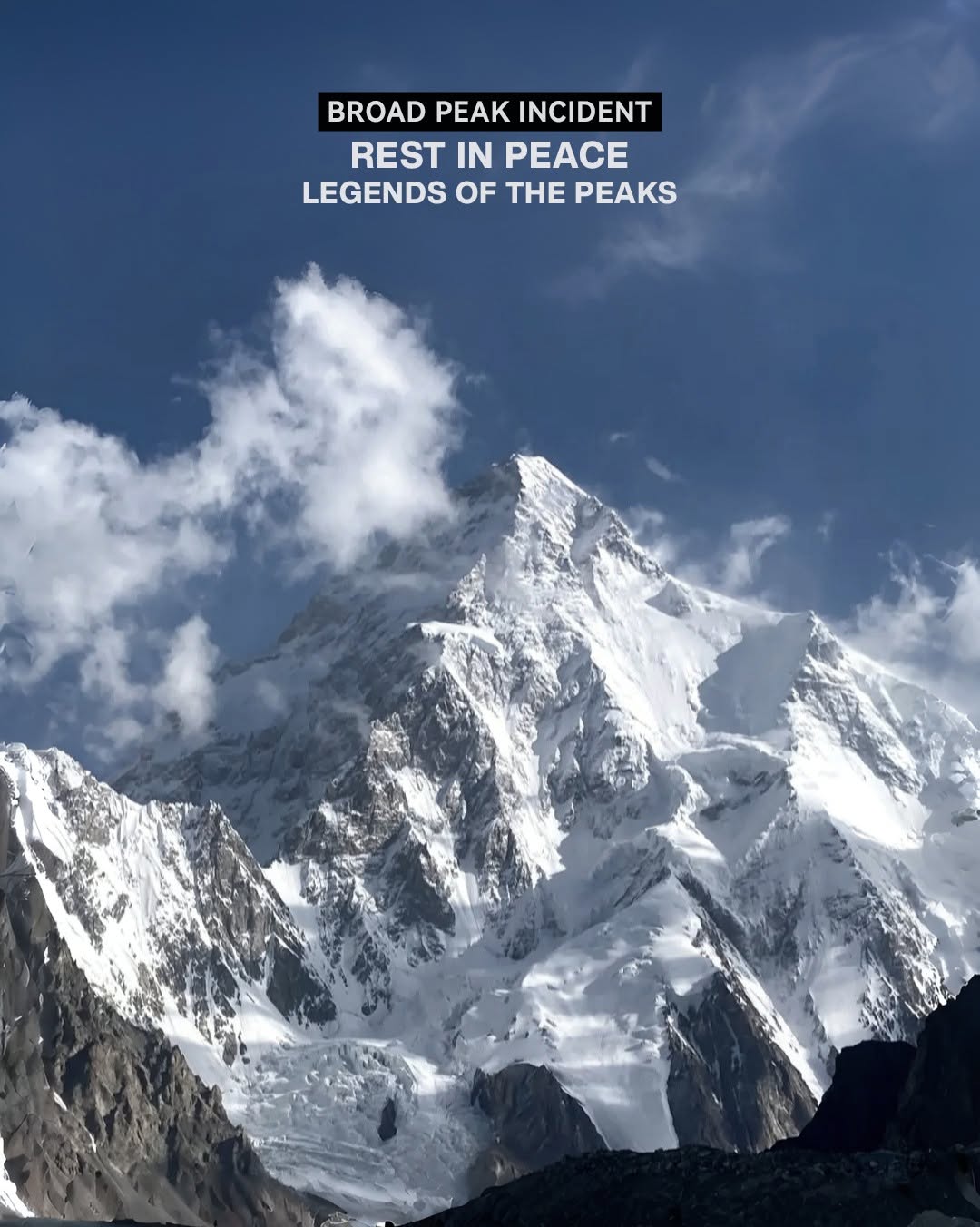
A Legacy That Will Endure
Records are eventually broken.
Summits are climbed again.
But true legacies are measured by the lives they inspire.
Nimsdai demonstrated that a young man from Nepal could rise from humble beginnings to stand among the greatest adventurers of modern history. He proved that Nepali climbers are not merely strong support staff but exceptional leaders capable of organising and leading world-class expeditions.
He inspired a new generation to dream bigger, work harder and reject artificial limitations.
His message was simple yet powerful:
"The only limits that truly exist are the ones we place upon ourselves."
Though he is no longer with us, his spirit lives on in every expedition that ventures into the Himalaya, in every young Nepali who dreams of becoming a mountaineer, and in every climber who believes that impossible is merely the starting point for the next great achievement.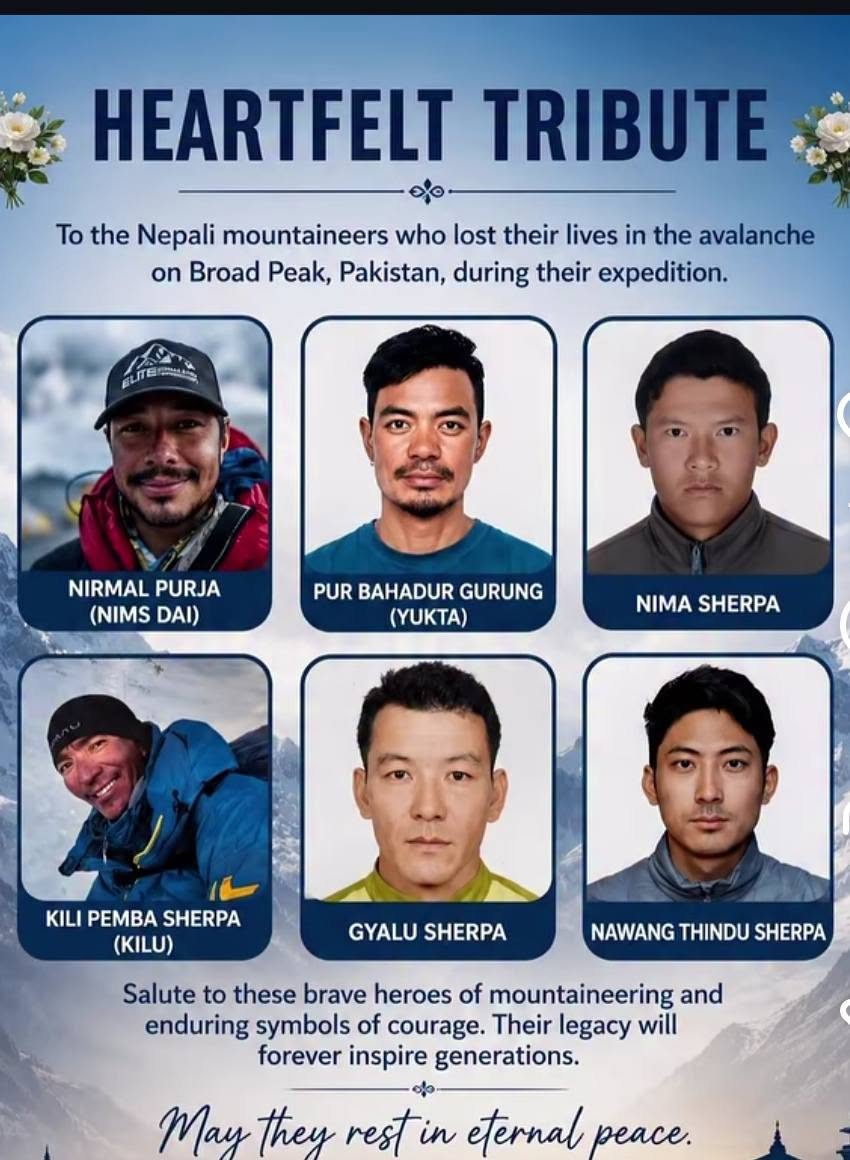
Nirmal "Nimsdai" Purja will forever remain one of Nepal's greatest sons, a fearless explorer whose courage, vision and determination changed the history of Himalayan mountaineering and inspired the world to look beyond its limits.