The Tibet–Nepal Flash Flood of 26 August 2026: A Himalayan Disaster of Unprecedented Scale!
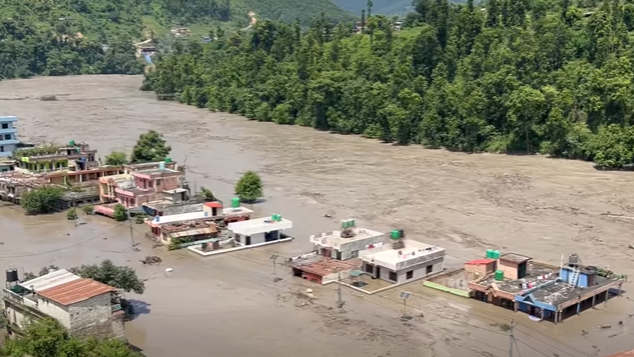
On 26 August 2026, a devastating flash flood surged from the Tibetan Himalaya into Nepal’s Rasuwa District, bringing an extraordinary torrent of water, mud, rocks, ice and debris. The sudden disaster struck the Rasuwagadhi–Timure corridor with immense force, destroying bridges, roads, buildings, vehicles and vital border infrastructure. Local residents, traders, drivers, tourists, guides, government employees and security personnel were among those affected, with a tragic loss of life and thousands still unaccounted for. Early assessments point toward a major glacial collapse or ice-and-rock landslide upstream as the possible trigger. The full scale of the human and economic devastation is still unfolding.
26 August 2026 will remain one of the darkest days in Nepal’s recent history.
In the early hours of Wednesday, 26 August, a sudden and extraordinarily powerful flash flood surged from the Tibetan side of the Himalaya into Nepal’s northern Rasuwa District, striking the Rasuwagadhi–Timure area along the Bhote Koshi River.
What followed was not an ordinary monsoon flood.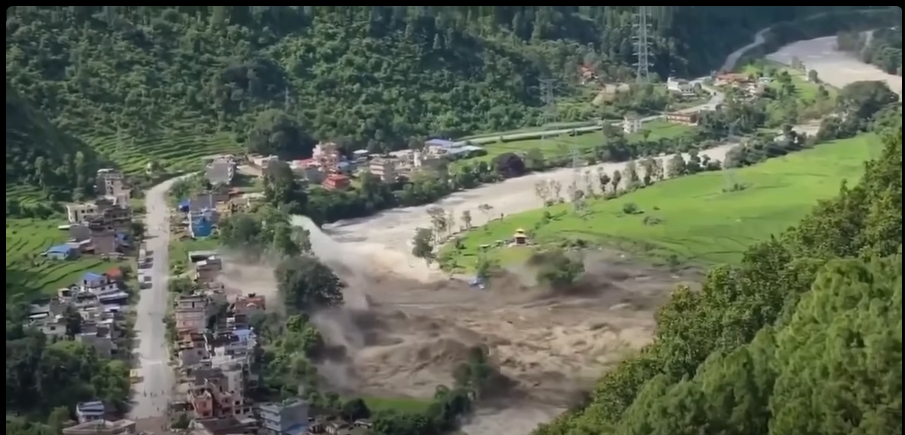
Within minutes, an enormous wall of water, mud, rocks, ice and debris swept through border facilities, settlements, roads, bridges, businesses and vital infrastructure. People had little or no time to escape. Buildings that had stood for years were suddenly engulfed, vehicles were carried away like toys and sections of the river corridor were transformed beyond recognition.
The disaster also struck a strategically important international gateway that is Rasuwgadhi. Rasuwagadhi is one of Nepal's major overland connections with Tibet, China and the area normally contains customs, immigration, security, transport, tourism and trading facilities. The flood therefore affected not only local communities but also government personnel, traders, drivers, tourists (cross border travelers), their guides & workers and security forces.
As rescue and recovery operations continue, the full scale of the tragedy is still emerging.
A Disaster That Came Without the Warning of a Normal Flood:
One of the most frightening aspects of the 26 August disaster was its suddenness.
People in the affected areas were not facing the kind of extended heavy rainfall that normally gives communities some warning that a river may rise. Witness accounts and early investigations indicate that the devastating surge originated much farther upstream on the Tibetan side of the Himalaya.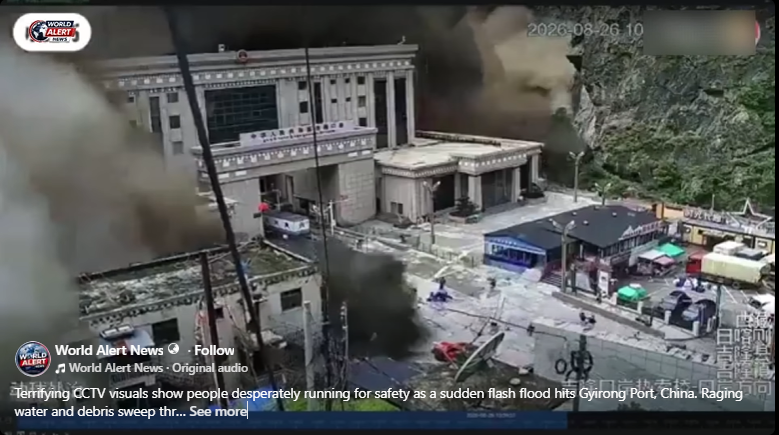
Current scientific and media assessments point toward a large glacial collapse or ice-and-rock landslide in Tibet. The collapse released a tremendous quantity of ice, rock, water and sediment into a Himalayan river system. The resulting surge then raced downstream toward the Nepal border.
This distinction is important.
It is therefore too early to simply describe the event as a conventional Glacial Lake Outburst Flood (GLOF). Initial speculation focused on a possible glacial-lake outburst and some reports also considered whether seismic activity could have played a role. However, subsequent analysis has increasingly pointed toward the collapse of part of a glacier and the resulting debris flow as the immediate trigger.
In other words, the Himalaya itself appears to have suddenly released an enormous mass of material into the river.
The Incredible Force of the Flood
The destruction seen in the aftermath is difficult to comprehend.
This was not simply water flowing over a riverbank. The flood carried huge quantities of mud, boulders, ice, broken rock and so on giving the torrent extraordinary destructive power!
A normal river flood may rise gradually, giving people some time to react. This debris-laden flash flood behaved very differently. It came with tremendous force, almost like a moving wall of concrete, carrying enormous boulders, trees and other debris and smashing into everything in its path. The Phurke Khola Bridge was not destroyed by the force of the floodwater alone. The broken section of another bridge farther upstream was swept downstream by the torrent and slammed into one of the main supporting pillars, adding enormous impact to the already powerful flow.
So, we can understand how buildings, bridges, roads and vehicles were destroyed so rapidly.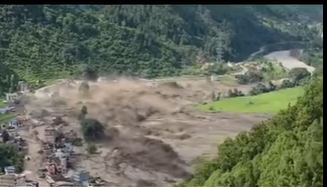
Videos and photographs from the affected area show the extraordinary scale of the torrent. Roads disappear beneath debris. Bridges are torn apart. Vehicles are swept downstream. Border facilities and buildings are buried or severely damaged.
Reports indicate that around 32 motorable bridges have been swept away or destroyed across the affected areas, while important road sections have also been washed out. The destruction has severely disrupted transportation and access for rescue teams.
The destruction was particularly severe in places where the valley was narrow, such as Rasuwagadhi, Timure and Syabrubesi, where there was very little space between the river and the steep mountain slopes. In some places, such as Debitar and along the Trishuli corridor, settlements and infrastructure were positioned directly in front of the advancing flash-flood flow. At Betrawoti Bazaar, the powerful torrent appears to have struck the frontal area before taking its direction and following along the natural course.
And everything standing in its path became vulnerable!
A Tragedy That Has Taken Many Lives
The human cost is enormous and tragic; the final number is still not known.
As of 27 August (afternoon), international reports were putting the confirmed death toll at 162 people, with the number expected to change as search teams are going to reach previously inaccessible areas. Reuters reported at least 165 deaths and nearly 1500 people missing in its latest assessment, while other major reports have given somewhat different figures. According to Nepal Tourism Board; 403 tourists of different nationalities have not been in contact since.
The victims are not from one community or one profession.
Among those affected are believed to be:
- Tourists and pilgrims,
- Trekking and tour guides and assistants or support staff,
- Local residents and families,
- Business owners and employees,
- Truck and bus drivers,
- Traders and transport workers,
- Nepal Army personnel,
- Nepal Police personnel,
- Armed Police Force personnel,
- Government employees,
- Hydropower and infrastructure workers,
Many others remain unaccounted for.
That makes the disaster particularly painful for Nepal's tourism and border communities. The Rasuwa–Kerung corridor is not only a local transport route; it is also an important gateway for international travelers, pilgrims, traders and people working between Nepal and Tibet.
Reports indicate that hundreds of foreign nationals were also among those reported missing, demonstrating how international the human impact of this disaster has become.
Thousands of Families Waiting for Answers 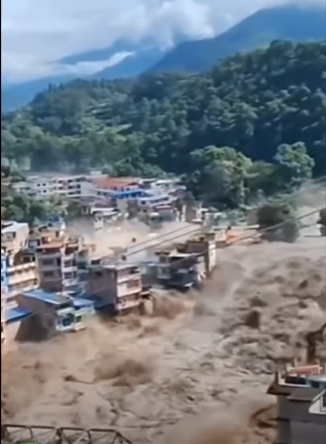
Perhaps the most difficult part of the tragedy is the number of people who remain missing.
Because the flood swept away buildings, vehicles, bridges and sections of road, identifying exactly who was in the affected areas at the moment of the disaster has been extremely difficult.
Communication networks are disrupted. Roads are destroyed. Debris covered large sections of the river corridor.
Consequently, a missing-person figure should not automatically be interpreted as a confirmed death.
But every missing person represents a family waiting for news.
For thousands of people across Nepal and abroad, the next few days will be filled with uncertainty, anxiety and hope.
Government Offices and Security Personnel Were Also Caught in the Disaster
The destruction was not limited to homes and private businesses.
The Rasuwagadhi border area contains important government and security infrastructure, including customs and immigration facilities and the personnel responsible for operating the international border.
Nepal Army, Nepal Police and Armed Police Force personnel were also among those affected by the disaster.
These men and women were not simply bystanders. Many were performing their normal duties at a strategically important border point when the disaster struck.
The tragedy therefore represents a loss not only to individual families but also to the institutions and communities that serve the country.
A Major Blow to Nepal's Infrastructure
The economic and infrastructural consequences will extend far beyond the immediate flood zone.
The disaster has damaged or destroyed:
Roads.
Major sections of the northern transport corridor have been washed away or buried beneath enormous quantities of sediment and rock.
Bridges.
Around 25 motorable bridges have reportedly been destroyed or swept away, isolating communities and making rescue operations considerably more difficult.
Buildings.
Homes, hotels, shops, warehouses, offices, security posts and government facilities have been severely damaged or completely destroyed.
Vehicles.
Hundreds of vehicles, including trucks and other transport vehicles, were in the affected corridor, and many were swept away or buried.
Electricity and communications.
Power and communication infrastructure has also suffered serious damage, leaving some areas disconnected precisely when communication is most urgently needed.
The economic loss will therefore be measured not only in destroyed property but also in lost trade, interrupted tourism, damaged transportation networks and the enormous cost of reconstruction.
A Disaster Beyond the Rasuwa Border 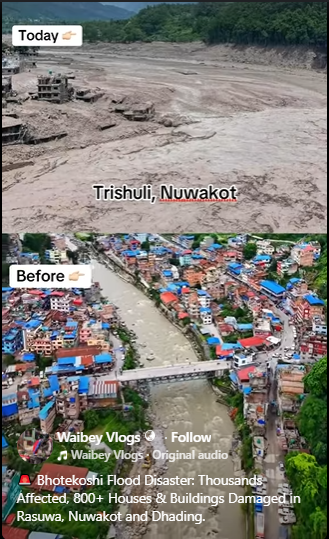
Although Rasuwa suffered some of the most devastating impacts, the consequences have extended downstream through the Bhote Koshi and Trishuli river systems.
The flood and debris affected communities and infrastructure farther downstream, with rescue and recovery operations extending into other districts.
This is a reminder that Himalayan disasters do not necessarily respect administrative boundaries.
An event beginning high in the mountains can affect communities many tens or even hundreds of kilometers downstream.
The Himalaya Is Warning Us
The tragedy of 26 August should not be viewed only as an isolated natural disaster.
It should also be a warning.
The Himalayan region is changing rapidly. Glaciers are retreating, high-altitude ice is becoming increasingly unstable and extreme events can have consequences far beyond the places where they begin.
Nepal, Tibet, India and other Himalayan regions share interconnected mountain and river systems. A dangerous event upstream can become a life-threatening catastrophe downstream.
This means that cross-border scientific cooperation, glacier monitoring, early-warning systems, satellite observation and disaster preparedness are no longer optional luxuries. They are necessities.
The occurrences have demonstrated this with devastating clarity.
Nepal Will Remember 26 August 2026
The Himalaya has always been both a source of beauty and a force of immense power.
Millions of people around the world come to Nepal to see its mountains, glaciers, rivers and valleys. Yet the same mountains that inspire awe can also unleash forces beyond human control.
The 26 August 2026 Tibet–Nepal flash flood has shown that reality in its most painful form.
It has taken away parents, children, workers, soldiers, police officers, traders, drivers, guides, tourists and government employees.
It has destroyed homes and businesses. 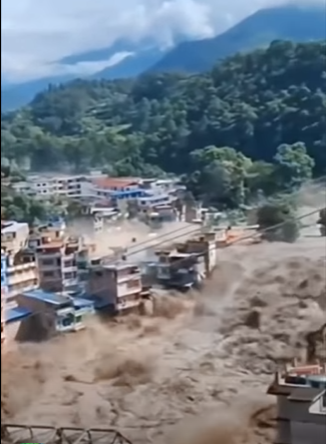
It has cut roads and bridges.
It has damaged a vital international gateway.
And it has left thousands of families waiting anxiously for news.
The full story of this disaster is still being written.
The final death toll is not yet known. The full economic loss cannot yet be calculated. The scientific explanation will require further investigation.
But one thing is already clear:
This was not simply another Himalayan flood. It was a catastrophic natural event of extraordinary force and human consequence.
As Nepal mourns those who have lost their lives, our deepest thoughts are with their families and with everyone still waiting for loved ones to return.
And as the rescue continues, the tragedy should also remind Nepal and the wider Himalayan region of one urgent truth:
We cannot stop the mountains from changing. But we can become better prepared for the day when they move.