Island Peak Climbing: From Everest Base Camp to the Summit
Price
$2,225.00$2,360.00
Destination
Everest Region
Duration
19 days
Difficulty
Expert
Activity
Mountaineering
Group Size
2 to 16 people
Max Altitude
6189m/20303ft
Best Season
Mar to May & Sep to Nov
Accommodation
Local Tea House/Lodges & Tent Camps where required.
Meals
Package (as per the deal)
Start/End Point
Kathmandu / Kathmandu
Overview
Island Peak, at 6189m, is one of Nepal’s most popular trekking peaks under the NMA, offering an exciting mix of glacier travel, snow and ice climbing with spectacular Everest-region views.
Island Peak (6189m/20305ft) is one of Nepal's most popular trekking peaks and an exciting introduction to Himalayan mountaineering. Located in the Everest region, the peak rises dramatically above the Imja Valley and Imja Glacier, offering a rewarding combination of high-altitude trekking, glacier travel, snow and ice climbing and spectacular views of some of the world's highest mountains.
Officially known as Imja Tse, Island Peak is managed as a trekking peak under the Nepal Mountaineering Association (NMA). Although the mountain is considered accessible to climbers with previous trekking or mountaineering experience, reaching the summit is a serious high-altitude undertaking. The final section involves crossing glaciated terrain, climbing steep snow and ice, and using mountaineering equipment such as crampons, harnesses, ropes and an ice axe.
A Mountain with Everest-Expedition History
Island Peak has a fascinating connection with the golden age of Himalayan mountaineering. The mountain was first climbed successfully in 1956 by a British team, during the period of the historic early Everest expeditions. Since then, Island Peak has become one of Nepal's best-known trekking peaks and an important training ground for climbers preparing for more demanding Himalayan objectives.
The mountain's distinctive appearance is one of the reasons for its name. From the surrounding valleys, the summit appears like an island rising above the surrounding sea of ice, particularly when viewed from the Imja Valley.
Location and Approach
Island Peak lies in the Khumbu region of eastern Nepal, in the Everest area. The normal approach follows the classic Everest Base Camp trekking route before branching toward Dingboche, Chhukung and the Imja Valley.
After reaching Dingboche, climbers continue toward Chhukung, from where Island Peak becomes increasingly prominent. The climbing route then follows the Imja Valley toward the mountain's base.
The standard Island Peak Base Camp is located at Parsya Gyabb, approximately 4970m (16303ft), on the northern side of the Imja Glacier. The area around Base Camp provides a relatively pleasant setting for such a high-altitude location, with open grassy terrain surrounded by dramatic Himalayan peaks and glaciers.
Island Peak Base Camp
Most climbing groups establish their main camp at Island Peak Base Camp (approximately 4970m). This is where climbers make their final preparations before attempting the summit.
Depending on the team's acclimatization, weather conditions and itinerary, some groups may establish or use a High Camp at approximately 5500m (18042ft). High Camp can shorten the summit-day journey, but it also means spending the night at a significantly higher altitude.
For climbers who are not yet fully acclimatized, careful planning is particularly important. The difference between starting from Base Camp and starting from High Camp can significantly affect the length and difficulty of summit day.
The Island Peak Summit Day
Summit day is the most demanding part of the Island Peak expedition. When starting from Base Camp, climbers normally begin around 2:00 AM, while teams staying at High Camp may start between approximately 3:00 and 4:00 AM.
The early start is necessary because climbers need sufficient time to reach the summit and descend before conditions deteriorate later in the day. Weather, wind, temperature and snow conditions can change rapidly at this altitude.
From Base Camp, the ascent to the summit generally takes around 6–8 hours, depending on the climber's fitness, acclimatization, route conditions and overall pace.
The climb begins across rocky and glacial terrain before becoming progressively steeper. As the route gains elevation, climbers encounter snow and ice and eventually reach the more technical section of the mountain.
Glacier and Technical Climbing
One of the defining features of Island Peak is the transition from trekking terrain to genuine mountaineering terrain.
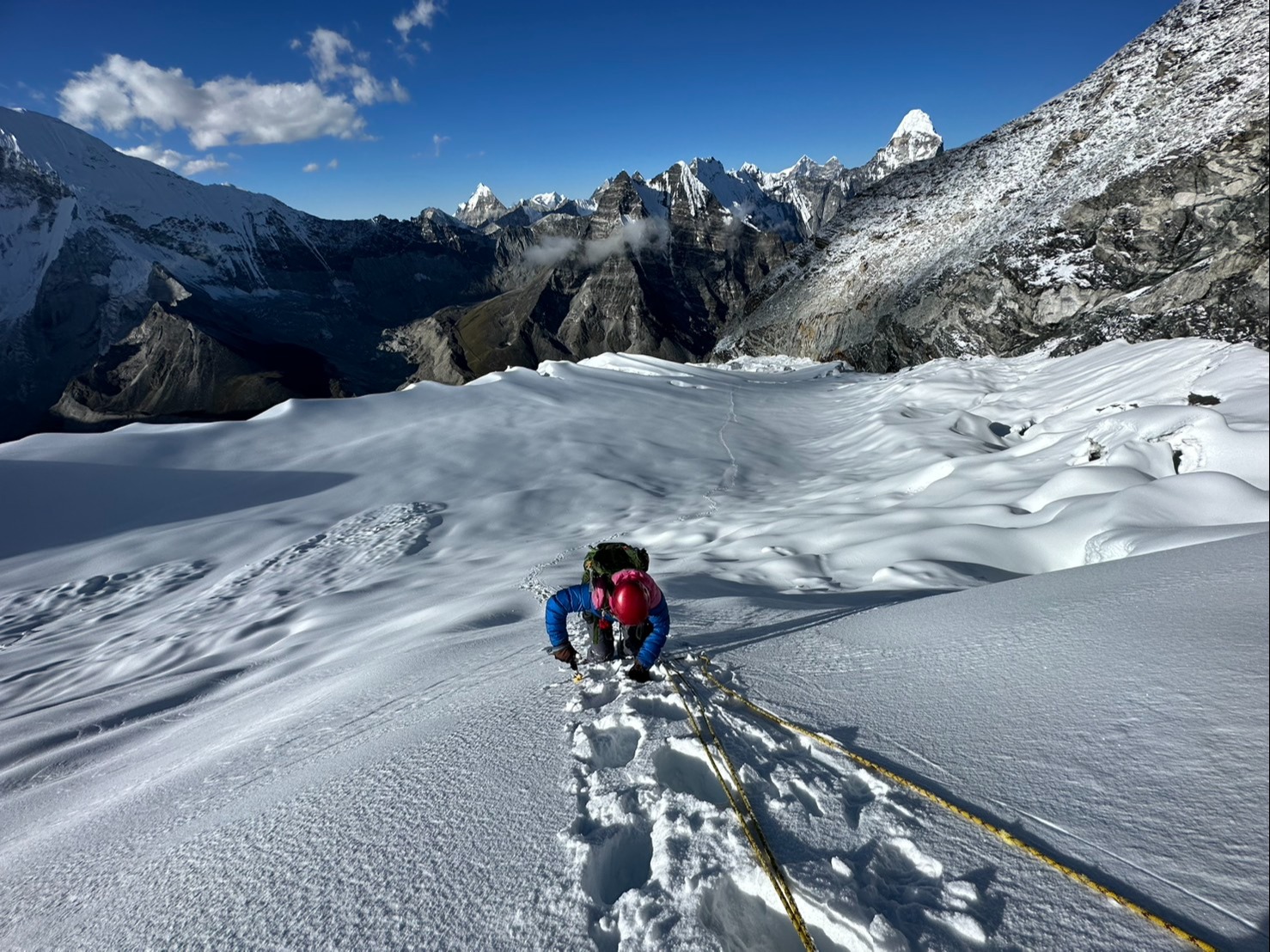
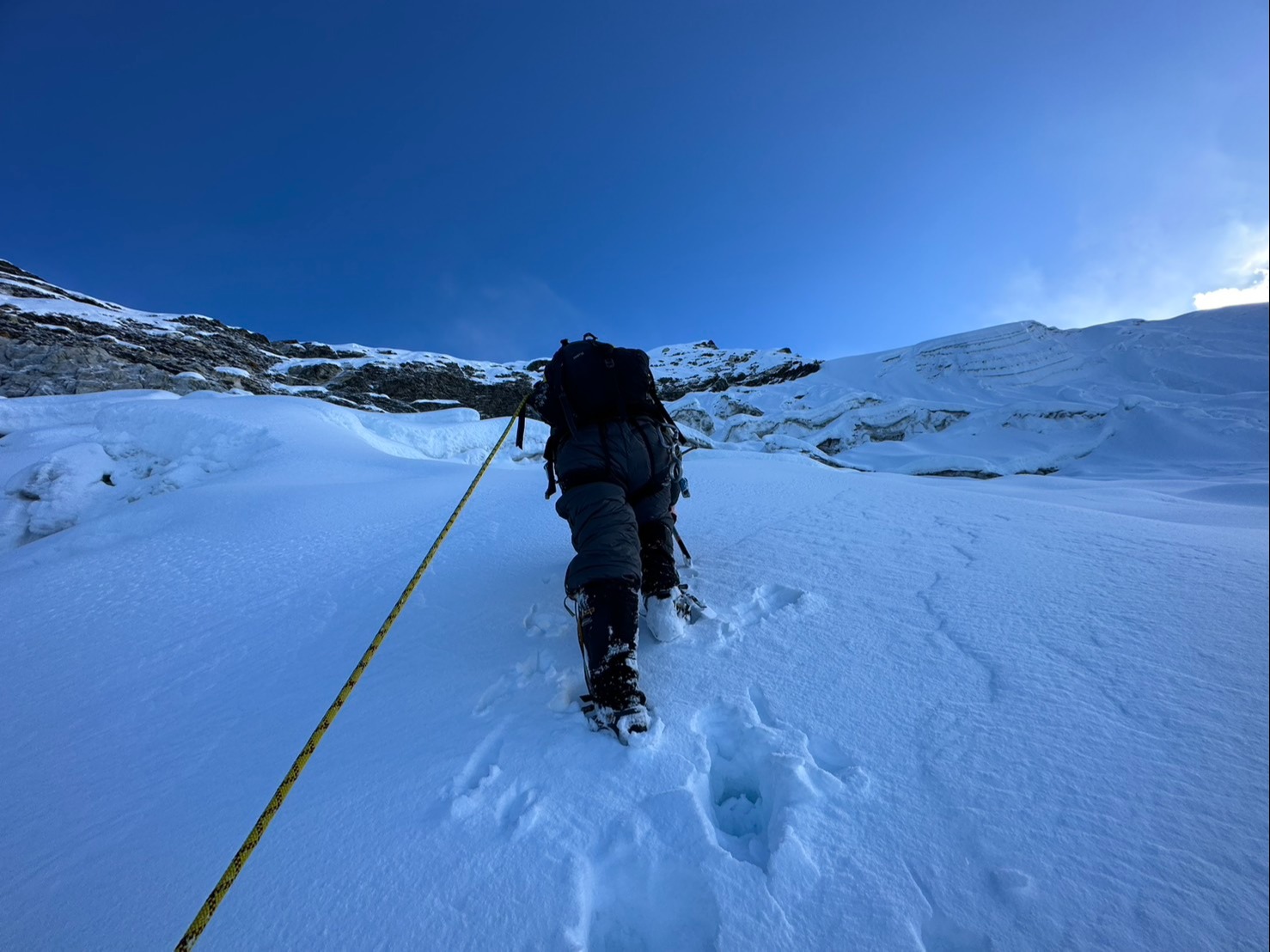
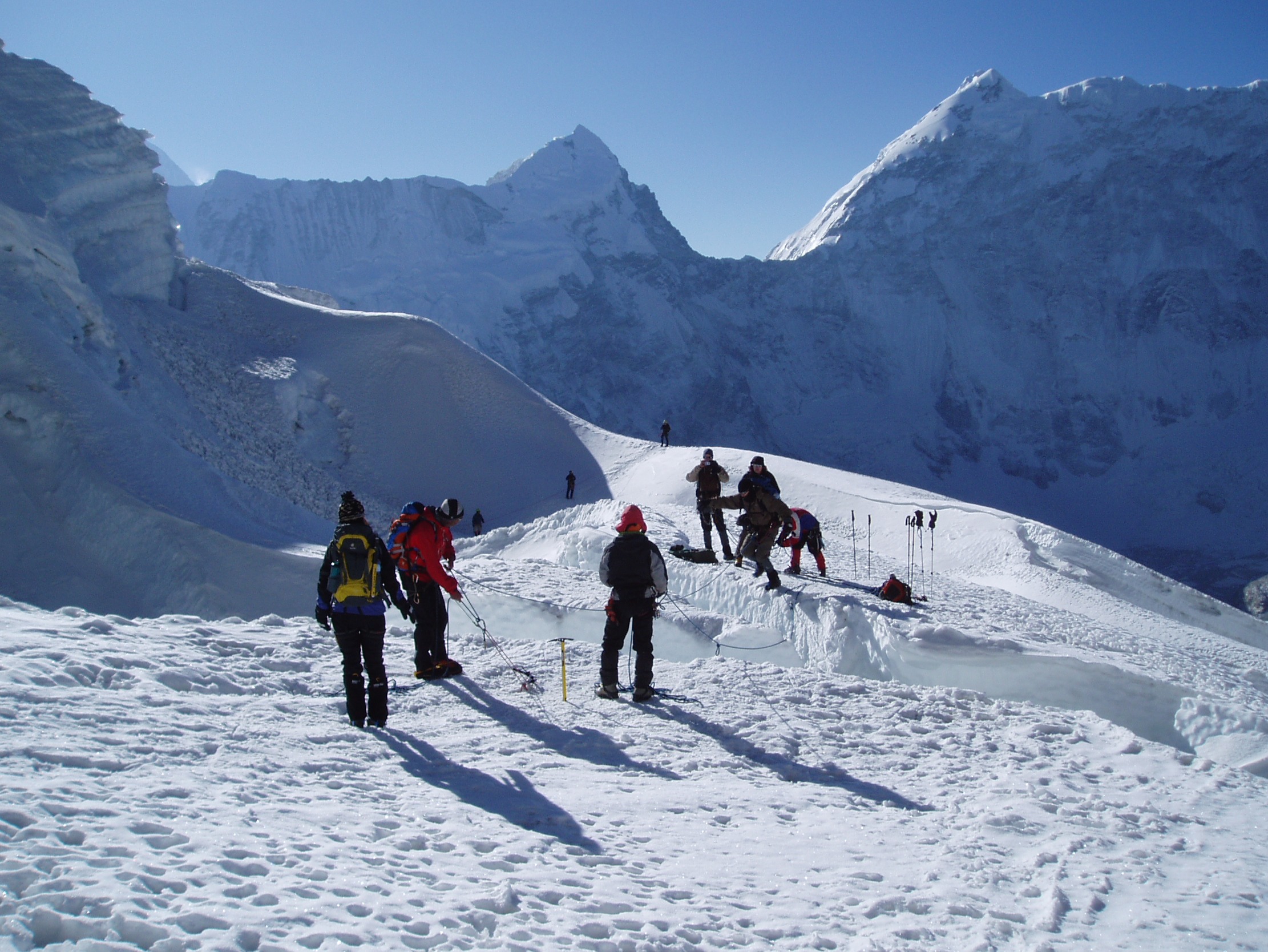
Climbers cross sections of glacier and snow-covered ground using crampons and mountaineering techniques. Depending on current route conditions, fixed ropes may be used on steeper sections, and climbers may need to ascend using a harness, climbing rope, ascender and other technical equipment.
The upper section is considerably steeper than the lower approach. The combination of altitude, cold, exposure and physical exertion makes the final climb challenging even for experienced trekkers.
For this reason, Island Peak should not be regarded simply as a high-altitude hike. Proper acclimatization, physical preparation, appropriate equipment and competent climbing guidance are essential.
Reaching the Summit – 6189m
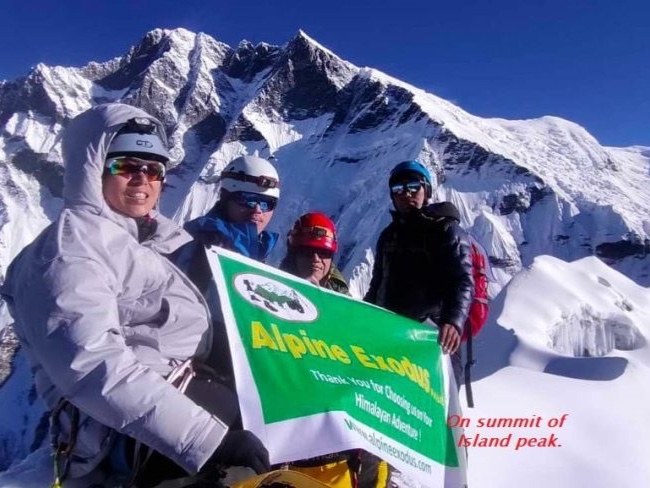
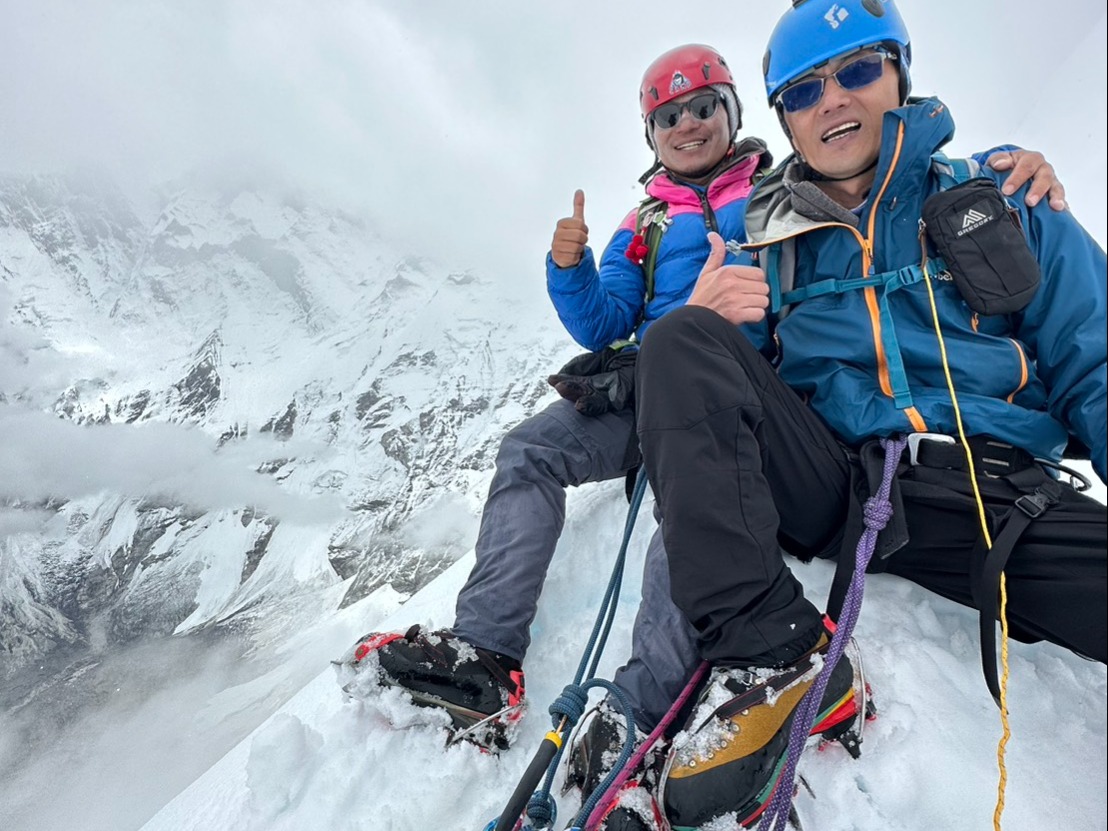
Standing at 6189m (20305ft) on the summit of Island Peak is a remarkable achievement. The summit provides an exceptional panorama across the Everest region, with an impressive collection of Himalayan giants surrounding the Imja Valley.
From the summit area, climbers can enjoy magnificent views of Lhotse, Nuptse, Ama Dablam, Baruntse, Makalu and numerous other peaks, together with the dramatic glaciers and valleys of the Khumbu.
The combination of technical climbing and extraordinary Himalayan scenery makes the summit experience particularly rewarding.
Descent to Base Camp
Reaching the summit is only half of the summit-day challenge. After enjoying the views and taking photographs, climbers begin the descent.
The descent from the summit to Base Camp generally takes around 3–5 hours, depending on conditions and the team's pace. Descending the steeper sections requires the same level of concentration as the ascent, particularly when moving on snow, ice and fixed ropes.
For well-acclimatized and physically prepared teams, it is possible to descend to Base Camp and continue onward to Chhukung on the same day, although this makes for a long and demanding day.
How Difficult Is Island Peak?
Island Peak is often described as one of Nepal's more accessible trekking peaks, but this should not be confused with being easy.
At 6189m, altitude itself is a major challenge. Climbers also need to cope with cold temperatures, long summit hours, steep terrain, glacier travel and sections of technical climbing.
Previous experience with crampons, ice axes, fixed ropes and basic mountaineering techniques is highly beneficial. However, climbers with limited technical experience can prepare for the ascent through appropriate training and, importantly, by climbing under the supervision of experienced mountain guides.
Good acclimatization is one of the most important factors in a successful Island Peak climb. A gradual itinerary through the Everest region allows the body to adapt to increasing altitude before the summit attempt.
Why Climb Island Peak with Alpine Exodus?
Island Peak offers much more than simply reaching a 6,000-meter summit. It is an opportunity to experience the transition from Himalayan trekking to mountaineering in one of Nepal's most spectacular regions.
With Alpine Exodus, the journey combines the classic Everest-region trekking experience with professional preparation for the Island Peak summit. Our approach focuses on appropriate acclimatization, careful pacing, experienced climbing support and attention to the changing conditions of the mountain.
From the trails around Namche and Dingboche to the dramatic landscapes of Chhukung and the Imja Glacier, every stage of the journey contributes to the final summit experience.
For adventurers looking to take their first serious step into Himalayan climbing, Island Peak is an exceptional objective - challenging enough to provide a genuine mountaineering experience, yet achievable with proper preparation, acclimatization and professional guidance.
Itinerary
Arrival (flight/arrival details) in Kathmandu. Airport reception and transfer to hotel. Your hotel will be located in Thamel – the tourists’ district. Service level of the hotel is equivalent of 3-star, centrally located and offers excellent range of breakfast.
Room check in is followed by a trip brief Q&A for today. Later, you will have some time to stroll around the hotel.
Inclusions & Exclusions
What's Included
- • Airport pick up and transfers,
- • Hotel in Kathmandu on BB plan (twin sharing, for (3 nts max),
- • Kathmandu – Lukla – Kathmandu (or Ramechhap – Lukla – Ramechhap) airfare and airport departure tax and required pick up and transfer,
- • Experienced trek guide for trekking period. Porters – generally each 2 members will have 1 porter on trek. But for the group of 5 people, there will be 3 porters, this also being the Island Peak climbing trip in which members may have more stuffs to carry than on the normal treks.
- • Experienced climbing guide ( bigger groups will have 1 head guide + assistant guide/s) for climbing from Base Camp to summit and back to Chhukung. This is counted as 1 night 2 days. The Climbing Guides are for this period.
- • All breakfast, lunch, dinner while on trekking/climbing with hot drinks,
- • Accommodation at lodges/Guest Houses while on trek. Tent camps during climbing period with meals,
- • Group nature climbing equipment and base camp arrangement; such as tents, mattresses, climbing ropes (both types – climbing and fix), snow bars, etc.
- • Duffle bags from the side of Alpine Exodus to carry your stuffs (if required),
- • Services of fresh fruits, tin fruits as special services from the side of Alpine Exodus,
- • All trek permits, National Park entry permits etc.
- • Peak climbing permits, garbage fees, climbing guides’ insurance,
- • Kathmandu city tours with guide and driver (for the sightseeing spots’ entry fees, please have a look below),
- • Welcome dinner, etc.
What's Not Included
- • Lunch and dinner while in Kathmandu (except the welcome dinner & daily breakfast),
- • Personal expenses, warm clothes, personal equipment for trek/climbing [if required the list of the personal equipment, please let us know. We will send you a separate list].
- • Cold drinks, bar bills if any, any high altitude dried (specially made such food is available) foods,
- • Medicines and medical related expenses if any. Travel/Trek insurance if any etc. Helicopter rescue flight in case of emergency,
- • Tips, loyalties to your guide, porters/drivers,
- • Nepal visa fee, international air ticket and airport departure tax etc.
Frequently Asked Questions
Yes, but basic fitness and a willingness to learn are essential. Island Peak is suitable for trekkers moving into Himalayan climbing, provided they receive proper training in crampons, ropes, ice axe use and basic climbing techniques before the summit attempt.